 GAOERJI STEEL


Search
How To Paint A Steel Building
The entire process of painting metal buildings includes a thorough pre-treatment (cleaning, rust removal), the application of a special primer for metal materials, and the final layer of durable exterior paint. For efficiency and uniformity of paint, we usually spray gun. Although the “direct-to-metal” paint on the market is very popular, claiming to save the primer link, how to operate it depends on the situation.
In the final analysis, the core steps are as follows: high-pressure water washing, cleaning up loose old paint and rust, backing (especially for galvanized steel), choosing the kind of high-quality metal paint, and finally choosing a good weather to start work.
This video provides a step-by-step guide on how to paint a metal building:
Step 1: Surface Treatment
Surface treatment is not just a preparatory action, it is the foundation of how many years your entire coating can last.
High-Pressure Water Washing Deep Cleaning
Over time, all kinds of dirt will accumulate on steel buildings: dirt, powder residues from old paint, oil stains, and bird droppings. Especially bird droppings, very acidic. These contaminants act like a barrier film that stops the new paint from sticking. You have to flush the whole building with a high-pressure water gun first.
- Removal Of Pulverized Layers And Dirt: High-pressure water flow can effectively strip off the layer of powdery “chalk” formed on old metal wall panels.
- Degreasing: Oil stains are common near mechanical equipment or rolling doors. It is useless to flush with water alone. You must use a special industrial degreaser to break down the grease, otherwise the back paint will peel off from these oil spots.
Rust Removal And Treatment
Rust is the cancer of any steel structure. If you try to save trouble and cover the paint directly on the rust surface, the rust underneath will continue to spread and top up the new paint.
- Remove And Polish: Pick up a spatula or wire brush and be a little tougher to remove all the peeling paint and loose rust spots. You need to dry until the hard base is exposed.
- Severe Corrosion Scheme: If the corrosion is very serious, manual brush may not be enough to see. In this case, sandblasting or mechanical grinding is necessary to grind out the bare metal.
- Prevent “Flash Rust”: Once exposed metal is exposed to oxygen, the reaction is very fast. After cleaning the bare metal, you must apply the anti-rust primer immediately and immediately to prevent the formation of “flash rust” before you have a chance to go to the top coat.
Shielding Protection
Before entering the primer stage, wrap up the areas that do not need to be painted. Cover windows, doors, decorative strips and lamps with masking paper and plastic sheeting. This step can make the finished edge look professional and neat, and it can save you hours of cleaning up flying paint later.
Step 2: Base The Metal Building
The primer is like a bridge between the metal surface and your beautiful topcoat. Although some modern paints are now known as “bottom one”, a dedicated primer is often the best insurance for long life.
Choose The Right Primer
Not all metal surfaces are the same thing, and choosing the wrong primer can lead to complete failure of adhesion.
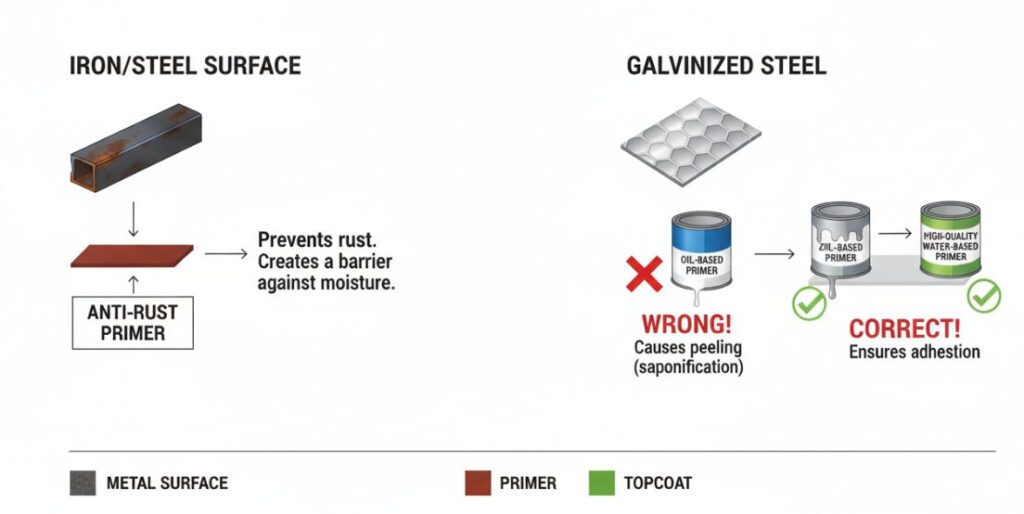
- Iron-Based Surface (Iron/Steel): For ordinary steel, what you need is an anti-rust primer. It creates a barrier that prevents moisture from contacting the metal, thereby preventing oxidation.
- Galvanized Steel: Do not use oil primer on galvanized steel, it will cause the zinc in the galvanized layer to react chemically (saponification reaction), causing the coating to fall off like a molt. Be sure to choose a zinc-based primer designed for galvanized surfaces or a high-quality water-based primer.
Construction Technology
For best results, all bare metal areas must be benchmarked against this:
- Primer: If most of the old paint is quite intact, you may only need to “patch” it where it is severely rusted or polished to exposed iron.
- Two-Pass Primer: For maximum adhesion and anti-rust effect, it is usually recommended to brush twice with a uniform primer. This ensures that there are no tiny pinholes leaking through the net, leaving no chance for rust.
Step 3: Select And Spray Topcoat
When the primer is dry, it’s time to apply the topcoat. The choice of products and construction methods directly determine how your steel structure looks in the end.
Choose High Quality Metallic Paint
What you need is a product that can withstand the wind and sun.
- Acrylic Latex Vs. DTM: High-quality exterior-grade acrylic latex paint is very flexible and can adapt to the thermal expansion and contraction of metal without cracking. However, direct metallic paint (DTM) is now becoming more and more popular. The DTM product is formulated so that it can be used as both a primer and a topcoat, and it is very durable. Even with DTM paint, a separate primer can significantly extend the life of the coating.
- Anti-UV Protection: Ensure that the paint contains anti-ultraviolet ingredients, otherwise the paint will fade and powder after a few years of sun exposure.
Spraying Construction Method
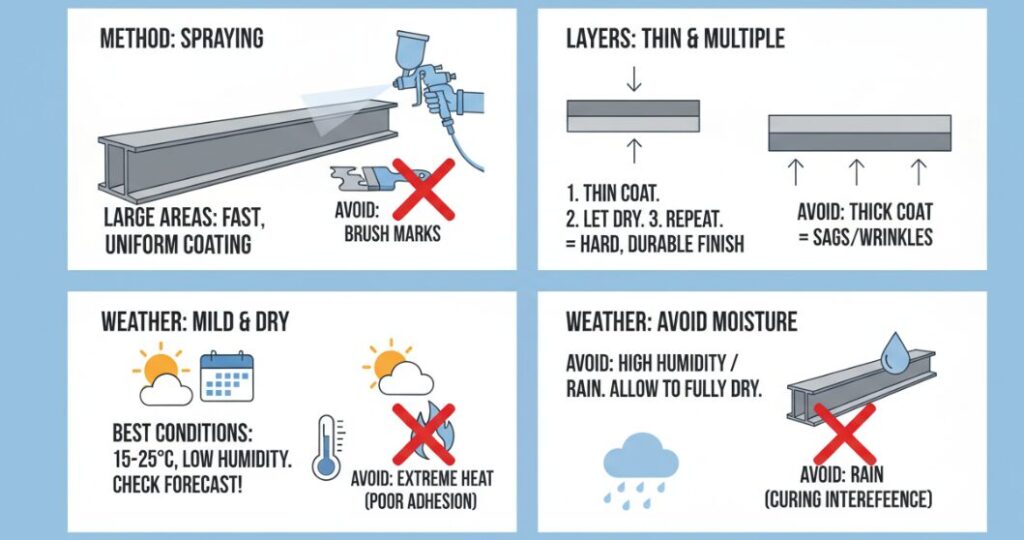
In a large area of steel structure with a brush or roller hand brush, low efficiency, but also easy to leave ugly brush marks.
- Preferred Spraying: For large areas of flat metal plate, spraying is absolutely the best solution. It covers fast and can spray out that uniform, factory-like texture.
- Thin Spray Multiple Layers: Don’t think about spraying thick paint at a time. Thick paint is easy to sag and wrinkle. On the contrary, you should spray several times thin. In this way, each layer can be dried and cured, and the final paint film is harder and more durable.
Weather Factors
Timing is everything. Schedule your schedule for mild, dry days.
- Avoid Extreme Heat: Spray paint on hot metal. The paint dries too fast and dries before it can grasp the surface. The adhesion will be poor.
- Avoid Moisture: High humidity or rain can interfere with the curing process. Watch the weather forecast and make sure there is enough time for the paint to dry completely.
Step 4: Success Tips And Maintenance
Use Airless Sprayer
For the smoothest and most efficient construction experience, airless sprayers are the industry standard. Unlike the compressed air spray gun, the airless model uses a high-pressure pump to punch the paint out, and the atomization is very uniform. This helps to “press” the paint into the texture of the metal surface, ensuring full coverage and not creating bubbles like a roller.
Long-Term Maintenance
After spraying paint, everything will be fine. Want to maximize coating life:
- Regular Inspection: Walk around the building sometimes to see if there are any signs of new scratches or rust.
- Local Repair: Found small problems immediately solved. Take a few minutes to mend the scratch today to prevent the whole board from rusting through tomorrow. Regular maintenance can greatly delay the time you need to repaint the entire building.
Author: Dave Miller
With over 18 years of experience in industrial maintenance and coating, I specialize in helping property owners protect their investments. I’m here to guide you through the technical steps of refinishing metal structures to ensure professional, weather-resistant results.