
 GAOERJI STEEL


Search
Why Is Steel Used To Make Bridges
The reason why steel can become the backbone of modern bridge engineering, in the final analysis, is because it has reached a near perfect balance between tensile strength, ductility and structural flexibility. In the eyes of laymen, this may only be a matter of material selection, but the significance of steel is that it can make the structure strong and light, which gives us the confidence to create those ultra-long span bridges-they not only have to withstand the daily heavy traffic flow, but also have to withstand the test of hurricanes and even earthquakes, but will not collapse easily.

This has to mention the essential difference between it and concrete. Concrete is pressure-resistant, but brittle and can’t stand tossing and turning. Steel is like the “flexible skeleton” of the structure. It can bend, stretch, release force when stressed, and bounce back to its original shape when the pressure is removed. This physical property, coupled with a high degree of prefabrication efficiency, makes steel the preferred choice for landmarks ranging from ordinary flyovers to the Golden Gate Bridge.
The Absolute Advantage Of The Mechanical Properties Of Steel
The core requirement of bridge engineering is to resist extreme external forces. Steel cannot be replaced because of two key indicators: high tensile strength and excellent ductility.
- High Tensile Strength: Steel can carry huge weight without permanent deformation. This means that we can make the components thinner and lighter, thereby significantly reducing the “dead load” of the bridge (I. e. the weight of the bridge). By contrast, doing this with concrete, the structure would be frighteningly heavy.
- Excellent Malleability: Unlike brittle materials that break suddenly under pressure, steel produces significant plastic deformation before failure. This provides us with a valuable “safety margin”-the structure will show signs of fatigue before major hazards occur, and to some extent, it is “early warning”.
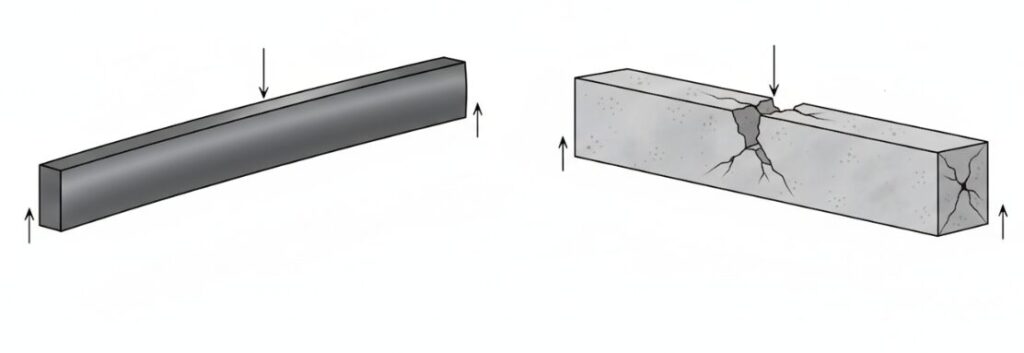
Steel And Concrete: The Game Of Structural Flexibility
Concrete is suitable for foundation or compression members, but if it is used for long-span design, flexibility is hard. When dealing with dynamic loads, the behavior of steel is another dimension entirely:
- Energy Absorption: When a bridge is hit by strong winds or earthquakes, there must be a place to consume this energy. This “flexible skeleton” of steel allows the structure to shake slightly, dissolving the kinetic energy, rather than cracking because it is too rigid like concrete.
- Elastic Recovery: The bridge is subjected to reciprocating rolling by vehicles every day, and this periodic vibration is very abrasive. Steel can adapt to this cyclic loading, because it can rebound after unloading, so even after decades of use, it can still maintain complete structural rigidity.
Steel Structure Workshop
Steel Structure Workshops offer versatile designs. Clear Span ensures unobstructed space, while Centre and Intermediate Columns provide economical solutions for wide spans.
Bridge/Steel Structure Bridgeipsum
Steel Structure Bridges utilize high strength-to-weight ratios to achieve long spans where intermediate supports are difficult.Their versatility makes them essential for critical infrastructure connectivity.
Steel Structure Buildings
Steel Structure Buildings feature versatile designs to meet diverse needs. Clear Span offers open space, while Centre and Intermediate Columns increase economy for large spans. Multi Gable accommodates complex widths.
Structural Diversity And Design Freedom
We prefer steel because it gives us great design authority.
- Complex Geometry: Whether it is a suspension bridge, an arch bridge or a truss bridge, the modular nature of the steel allows us to carry out a variety of precise splicing, cutting and welding. Want to maximize capacity while maintaining beauty? Use steel.
- Long Span Potential: Because of the high strength-to-weight ratio of steel, it is the only feasible solution for the construction of ultra-long span bridges. With less weight, we can extend the distance between the support points and achieve the iconic landscapes that span the moat.
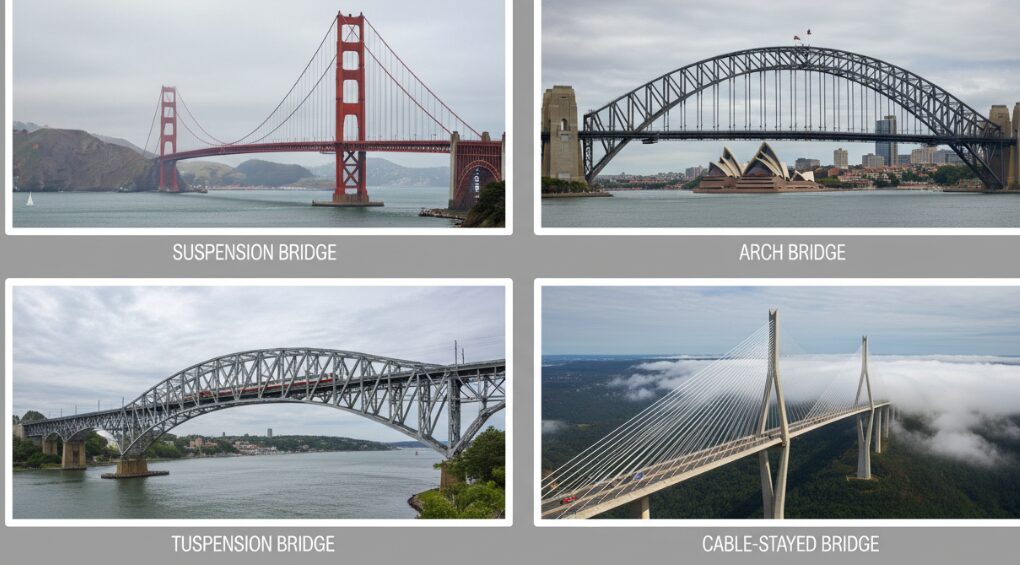
Efficiency First: The Value Of Modular Prefabrication
Putting aside the physical properties, the advantages of steel in construction logic are equally obvious.
- Prefabricated Production: The components are made in a controlled environment of the factory, and the quality is extremely stable.
- Shorten The Construction Period: On-site assembly is like building “Lego”. Compared with the long maintenance period of cast-in-place concrete, the construction efficiency of steel structure is much higher. Building roads in busy urban areas means minimizing disruption to traffic and opening to traffic more quickly.
Summary: A Safe Choice For The Future
From the ordinary interchange on the outskirts of the city that carries the commuter flow every day to the international landmark across the strait, the status of steel in the civil engineering industry has always been the “gold standard”. It balances raw strength, flexibility and construction efficiency, which can adapt to the changing needs of transportation, which is exactly what we need. As long as it can withstand the toss of the environment and maintain the characteristics of lightweight profile, steel is destined to be the only choice for future bridge construction.
Author: Marcus Thorne
“Hi, I’m a structural engineer and infrastructure enthusiast with over 14 years of experience in urban design. My work focuses on the intersection of material science and civil architecture. I am passionate about deconstructing complex engineering concepts into accessible insights, helping people understand the ‘why’ behind the massive structures that connect our world.”
The prev: How To Build Steel Frame BuildingThe next: canopy for gas station
Related recommendations
-

How To Protect Structural Steel From Corrosion
26Master Steel Anti-Corrosion: From ISO 12944 Levels To Sa 2.5 Surface Prep And Life Cycle Cost Analysis (LCCA).
View details -
Prefabricated Retail Buildings
16Boost ROI With Prefabricated Retail Buildings. Delivery In 4-8 Weeks, 50% Lower Costs, And Modular Flexibility.
View details -
How Long Does It Take To Erect A Steel Building
267A 5,000 Sq Ft Steel Building Takes 5-7 Days To Erect. Discover Why The Full Project Timeline Is Typically 12-16 Weeks.
View details -
How To Reduce Vibration In Steel Structure
14Master Steel Structure Vibration Control Using Stiffness, Damping, And Design Guide Standard For Stable Buildings.
View details




HelloPlease log in