
 GAOERJI STEEL


Search
What Type Of Steel Is Used In Bridges
The steel used in modern bridge structures is primarily governed by the ASTM A709 standard in North America. This is not the kind of ordinary construction steel that is used to weld a shelf casually. Bridge steel is extremely demanding on toughness and weldability. If ordinary construction steel is the coolie of “endurance”, then bridge steel is the “all-round athlete” with special training.
Commonly used grades mainly include ASTM A36 (carbon steel for small span), ASTM A572 (high strength low alloy steel), and the famous ASTM A588 (weathering steel). In extreme challenges such as suspension bridges with super long spans, we will use high performance steel (HPS), such as HPS 70W.

Gold Standard For Bridge: ASTM A709
Talking about steel for bridges can’t get around ASTM A709. This is the proprietary specification for bridge structural steel. The biggest difference between it and steel for residential or commercial buildings is that it must pass the “fracture critical” and “Charpy V-notch” toughness tests.
The bridge is not dead, it keeps shaking. Under continuous vibration and severe temperature difference, if the metal is not tough enough, brittle fracture is easy to occur. Many times it is not because of insufficient strength that causes accidents, but because the material becomes brittle at extreme temperatures.
Commonly Used Steel Grades In Bridge Construction
We will choose materials according to the span of the bridge, the force and the environment. Nothing more than the following:
1. ASTM A36
For decades, the A36 has been the preferred choice for small span bridges and secondary components such as railings and bracing connections. It is the kind of standard carbon steel, welding is very convenient, the price is also close to the people. However, due to its yield strength of only 36,000 psi, the current heavy-duty road bridge or railway girder has rarely regarded it as the “protagonist.
2. ASTM A572
As bridges became more complex, the industry’s focus shifted to ASTM A572. As the low-alloy steel, its strength-to-weight ratio is much higher than that of A36. This means we can use thinner, lighter cross-sections to carry the same load. From the cost point of view, this not only saves steel, but also significantly reduces the cost of the lower foundation, which must be calculated in large-scale projects.
3. ASTM A588
This is one of the most admired materials in bridge engineering. A588 contains small amounts of copper, chromium and nickel.
- Corrosion resistance: It will generate a stable and dense oxide layer (I. e. film) on the surface.
- Maintenance advantage: This layer of film is actually a natural protective layer, blocking further corrosion. This means that owners no longer have to regularly paint, sand blasting, long-term maintenance costs are surprisingly low. The sentence must be reminded that it should be used carefully in coastal areas where salt fog is extremely heavy.
Steel Structure Workshop
Steel Structure Workshops offer versatile designs. Clear Span ensures unobstructed space, while Centre and Intermediate Columns provide economical solutions for wide spans.
Bridge/Steel Structure Bridgeipsum
Steel Structure Bridges utilize high strength-to-weight ratios to achieve long spans where intermediate supports are difficult.Their versatility makes them essential for critical infrastructure connectivity.
Steel Structure Buildings
Steel Structure Buildings feature versatile designs to meet diverse needs. Clear Span offers open space, while Centre and Intermediate Columns increase economy for large spans. Multi Gable accommodates complex widths.
High Performance Steel For Complex Infrastructure
In the face of extra-large span suspension bridge or cable-stayed bridge, ordinary grade steel is more than enough. HPS 70W high-performance steel is required.
It is manufactured through an advanced thermomechanical control process, with the advantages of a very hard core:
- Ultra-high yield strength: 70,000 psi supports longer spans.
- Extreme fracture toughness: It can maintain stability under extreme dynamic loads, eliminating the risk of brittle fracture.
- Excellent welding performance: Despite the high strength, it is still stable when welded in the factory and on the site, ensuring the structural integrity of each node.
Why Is Bridge Steel And Ordinary Construction Steel Completely Different?
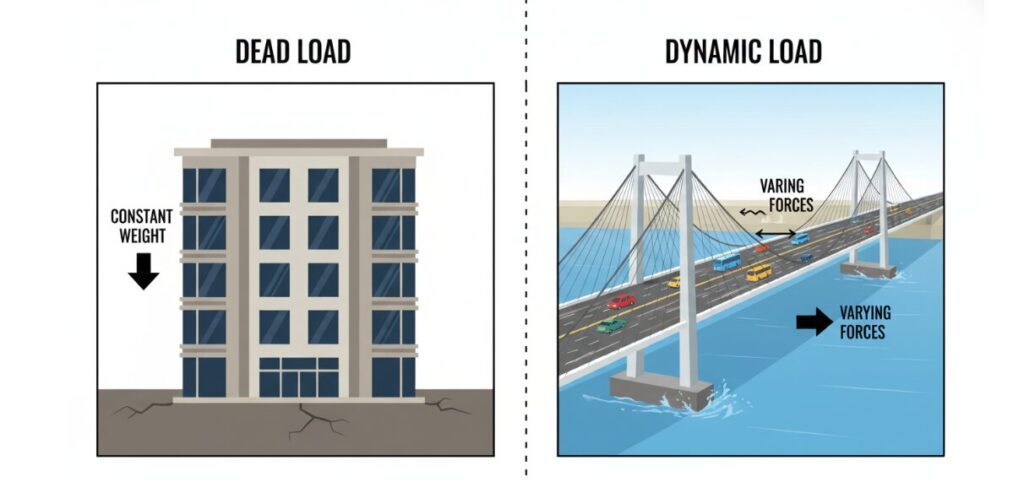
The core difference is how to deal with dynamic load and fatigue.
Most of the steel in the building supports the “dead load” (that is, the weight of the building), while the bridge steel bears the pressure of millions of vehicles going back and forth every day.
The bridge is exposed to broad daylight. The ASTM A709 standard ensures that the steel remains ductile even at low temperatures of minus tens of degrees. The culprit of the bridge collapse accidents that shocked the world in the early 20th century is often “brittle fracture”.
Author: David Miller
“I am a structural engineer with years of experience in large-scale infrastructure and bridge design. To me, bridge steel isn’t just a building material—it is a specialized ‘athlete’ that must perform under extreme stress. Throughout my career, I have focused on the critical balance between material strength and fracture toughness, ensuring that every project I handle, from simple spans to complex HPS-reinforced structures, meets the highest safety standards of ASTM A709.”
Related recommendations
-

How Long Does It Take To Build A Prefabricated Home
12Build Your Home In 12-24 Weeks! Learn How Our Prefab Process Saves 50% Of The Time Vs. Traditional Construction.
View details -
Is Structural Steel Stronger Than Concrete
207Yes, Steel Is Significantly Stronger. Learn How Steel Compares To Concrete In Tension, Compression, And Strength Ratios.
View details -
Difference Between Pre-Engineering Building And Ordinary Steel Structure
21Save 30% On Costs And 50% On Time. Learn Why PEB Is The Superior Choice For Industrial Projects Over Traditional Steel.
View details -
Steel Structure vs. Concrete Buildings – Which Is Better?
311Steel structures are prefabricated and assembled on site, reducing construction time by 30–50% compared to concrete. Steel buildings require lighter foundations, lowering base costs. However, steel prices fluctuate with the market, while conc...
View details

HelloPlease log in