
 GAOERJI STEEL


Search
What Type Of Steel Is Structural Steel
Structural steel is primarily categorized into carbon steel (specifically mild steel) and high-strength low-alloy steel (HSLA). On the construction side, the most common contacts are ASTM A36 and ASTM A992. A36 is an old man, standard carbon steel, carbon content is controlled at 0.29, ductility and weldability are not to be chosen; A992 is generally used to make wide flange I-steel and H-steel, with yield strength up to 50 ksi and tensile strength higher. Structural steel is different from tool steel and stainless steel. Its chemical composition-iron, carbon, manganese and some trace alloy ratios are precisely calculated. This ratio is to get the best strength-to-weight ratio, so that frames, bridges and high-rise buildings are durable and all indicators are within a controllable range.
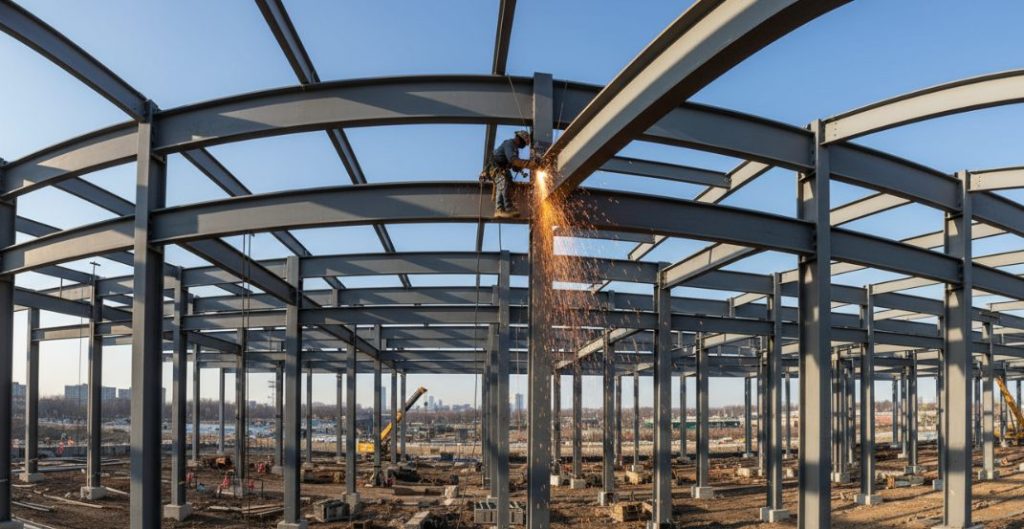
Two Common Types Of Structural Steel
If you ask “what kind of steel is structural steel”, you must first understand that it does not refer to a certain of materials alone, but a specialized category. We all know that it is mainly divided into two groups, and the work done on the construction site is also different:
1. Carbon steel (low carbon steel)
Low carbon steel can be said to be the “panacea” in structural engineering. Its carbon content is relatively low, which is the key to its good use. Because of its strong versatility, as long as it is not the kind of project that has extremely special requirements for load-bearing, it is generally selected for large-scale goods.
2. High-Strength Low-Alloy Steel (HSLA)
Now the architectural design is more and more to the limit, this time has to rely on HSLA to play. In fact, a small amount of alloying elements is added to it, but the strength and atmospheric corrosion resistance are much higher than those of ordinary carbon steel, and the weight has not increased much. Engineers with a little experience will basically cut directly to this option when encountering large-span or demanding lists.
The Most Commonly Used Structural Steel Grades
In North America and most of the world’s construction market, structural steel basically have to look at ASTM (American Society for Testing and Materials) standards. The two categories mentioned just now are the most typical representatives of these two brands.
Steel Structure Workshop
Steel Structure Workshops offer versatile designs. Clear Span ensures unobstructed space, while Centre and Intermediate Columns provide economical solutions for wide spans.
Bridge/Steel Structure Bridgeipsum
Steel Structure Bridges utilize high strength-to-weight ratios to achieve long spans where intermediate supports are difficult.Their versatility makes them essential for critical infrastructure connectivity.
Steel Structure Buildings
Steel Structure Buildings feature versatile designs to meet diverse needs. Clear Span offers open space, while Centre and Intermediate Columns increase economy for large spans. Multi Gable accommodates complex widths.
ASTM A36: The Old Standard in the Industry
A36 is definitely the most common low-carbon structural steel on the construction site. Its engineering characteristics are actually very good to understand:
- The carbon content of the card: the highest is only 0.29 percent. I have seen some unqualified materials with excessive carbon content before. They are so brittle that they cannot be used in buildings at all.
- Excellent ductility: Because of the lack of carbon, A36 will bend and deform when subjected to extreme pressure, instead of breaking directly or breaking into slag. This is the life-saving feature when building a structural framework.
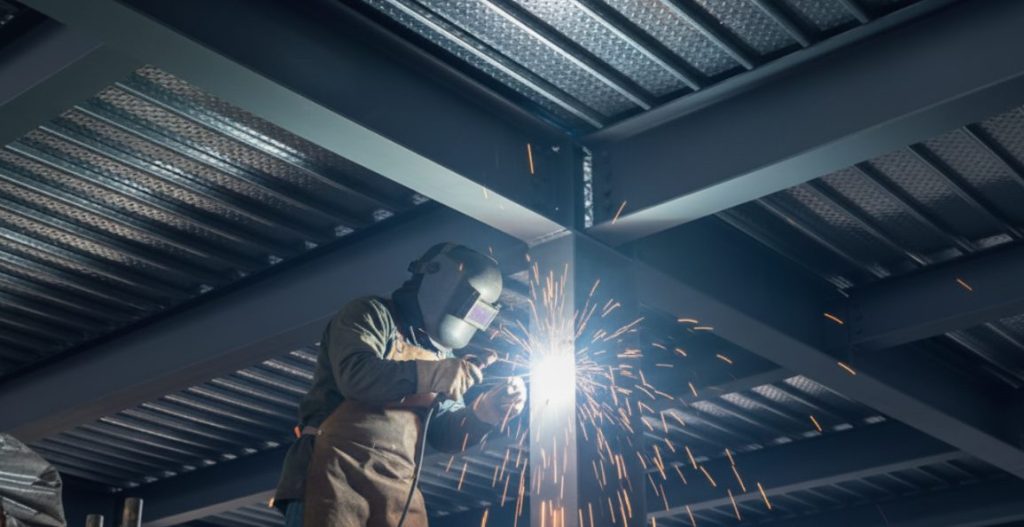
- Excellent weldability: A36 is very convenient to handle whether it is bolts, rivets or direct welding of steel plates and beams during on-site construction.
ASTM A992: Heavy Duty Preferred
As long as the drawing is a large structural part, the default option is basically A992 HSLA steel.
- Counterpart use: It is mainly used to make wide flange I-beam and H-beam. These are the “main force” supporting the building’s self-weight.
- High Yield Strength: A992 has a minimum yield strength of 50 ksi. It can withstand much more pressure than the A36 before permanent deformation occurs.
- Excellent tensile strength: In addition to being able to carry pressure, it is not easy to have an accident when pulled.
Special Chemical Formula For Structural Steel
Compared with other steels, the chemical composition of structural steel is set very purposefully. This thing doesn’t just turn iron into water, it’s a formula specially formulated for building safety:
- Iron: The metal used as a base to hold up the basic skeleton.
- Carbon: The main hardener. Carbon in structural steel must be pressed against points (such as 0.29 percent of A36) to find a balance between strength and ductility.
- Manganese: deoxidizer when steelmaking, very critical. It can increase the toughness of steel, hardenability, but also more wear-resistant.
- Trace alloy: HSLA steel like A992 will secretly add vanadium, niobium or copper. This microalloying operation can jerk the yield and tensile strength without delaying your on-site electric welding.
What Is The Difference Between Tool Steel And Stainless Steel?
- It’s not tool steel: tool steel is extremely high in carbon and ridiculously hard-it’s to make tools, drills, and molds. But this can also make it particularly brittle. If you dare to use tool steel to repair a bridge, cross a car or blow a strong wind, it will not withstand the dynamic force and will crack directly.
- It’s not stainless steel either: it has a lot of chromium (usually at least 10.5 percent) added to it to prevent rust. It is really beautiful to use it to make kitchen appliances or exterior walls of high-grade buildings, but to use it to support the internal core frame of a building? Not only can’t keep up with the mechanical properties, but the cost can make Party A lift the table directly.
Core Performance And Practical Application
Just because A36 and A992 are very accurate in chemical composition, they bring 3 real benefits to the engineering side:
- The optimal strength-to-weight ratio: the load-bearing capacity is extremely strong, but it will not add excess dead weight to the building itself.
- Durable: can withstand decades of wind and sun, heavy pressure and various natural external forces.
- Predictability: When encountering a specific load or temperature, what reaction A36 and A992 will have, the engineer can calculate clearly at the drawing stage, so that the design is safe.
- Where they are usually used: since these characteristics, structural steel has naturally become the bones of modern infrastructure. The frame of the heavy industrial plant, the long-span bridge that passes tens of thousands of cars every day, and the skyscrapers that you usually see in the city are all supported by it.
Author: Mark Henderson
Hi, I’m a veteran structural engineer with over 11 years of experience in the steel construction industry. Throughout my career, I’ve overseen the material selection for everything from high-rise commercial buildings to massive industrial infrastructure. I’m passionate about bridging the gap between complex engineering standards and practical site application.
The prev: How To Design Bracing For Steel StructuresThe next: How To Erect Structural Steel
Related recommendations
-

What Is Structural Steel Used For
32Discover Why Structural Steel Is The Top Choice For Skyscrapers, PEB Warehouses, And Resilient Infrastructure.
View details -
How To Design Bracing For Steel Structures
19How To Design Bracing For Steel Structures
View details -
Prefabricated Retail Buildings
16Boost ROI With Prefabricated Retail Buildings. Delivery In 4-8 Weeks, 50% Lower Costs, And Modular Flexibility.
View details -
Why Steel Structure Construction Is More Preferred
26Learn Why Commercial And Industrial Projects Choose Steel Structures For High Strength, Fast Peb Assembly, And Low Costs.
View details



HelloPlease log in