
 GAOERJI STEEL


Search
What Is The Main Advantage Of Structural Steel
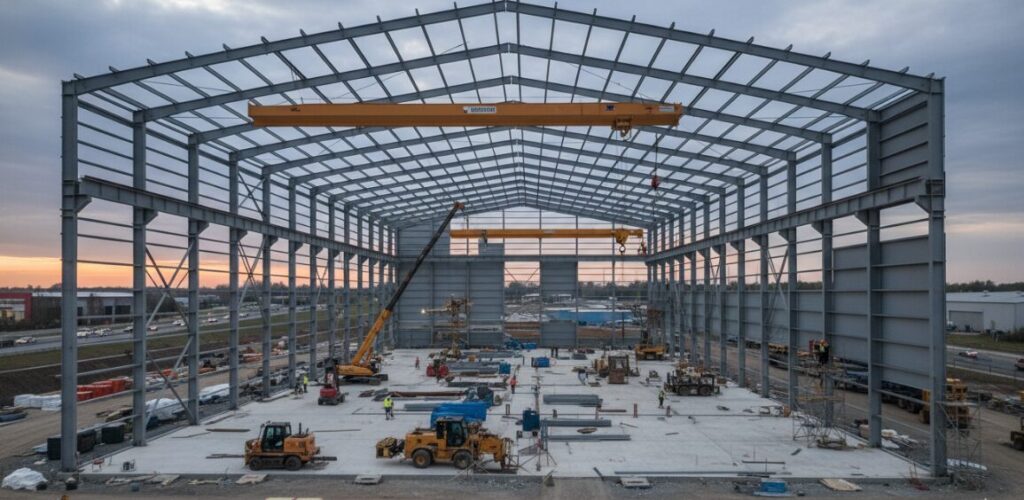
The main advantage of structural steel is its exceptional strength-to-weight ratio combined with high ductility. For structural engineers and architects, this specific property means that steel components contribute significantly less dead load to a structure compared to concrete or masonry while supporting equal or greater loads. This primary advantage directly enables three critical engineering capabilities: longer spanning distances without intermediate columns (creating open floor plans), reduced foundation sizes due to lighter overall building weight, and smaller structural member sections (maximizing usable floor area). Furthermore, unlike brittle materials, steel’s ductility allows it to deform plastically before failure, providing a critical warning mechanism and energy absorption capacity during seismic events. In short, the main advantage is structural efficiency driven by high strength and low self-weight.
Deep Understanding Of Strength-To-Weight Ratio
Although many materials on the market are hard or light enough, steel structures are in a very unique position: they can explode with surprisingly high bearing capacity per unit of mass.
This property makes steel far more efficient than traditional reinforced concrete. When designing concrete structures, you will find a headache: a large part 1 the strength of the material is actually wasted on supporting the weight of “yourself. But I found that with the steel structure, due to the light weight of the material, we as engineers can release more structural potential to the “live load” (that is, the real flow of people, furniture and equipment), rather than the limited budget and material consumption in the fight against gravity.
Three Core Engineering Capabilities
This “low dead load, high strength” feature translates directly into design flexibility. Specific to the project landing, mainly reflected in the following 3 aspects:
A Larger Span Of Space
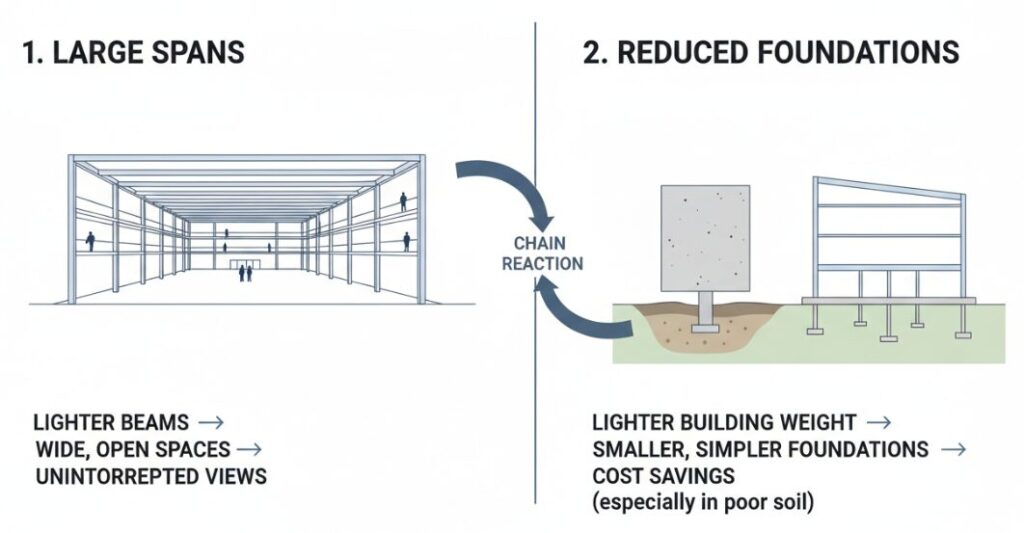
The most intuitive bonus to the steel strength-to-weight ratio is the large span. Because the steel beams themselves are light enough, when they cross a huge space, they will not suffer from large deflection or failure because they “cannot carry their own weight. In today’s modern office buildings, large atriums or commercial venues, if you want the kind of open sense of unobstructed sight, steel structure is almost the only standard.
Reduce Foundation Requirements
It’s a chain reaction. When the weight of the entire building is reduced, the force transmitted to the foundation also decreases. Especially in areas with poor soil conditions, the use of steel structures can often save a huge amount of foundation treatment costs. A lighter building means that the foundation can be made smaller and simpler, and even avoid some extremely complicated deep pile construction.
The Component Section Is Smaller And The Inner Area Is Larger.
The “core advantage” is also reflected in the business dimension. Because the steel is strong enough, the steel column or beam required to support the same load is one size smaller in diameter or depth than the concrete member. For developers, this gap of a few centimeters translates directly into more rentable or marketable area. In an area with an inch of land and an inch of gold, this increase in space utilization is real money.
Steel Structure Workshop
Steel Structure Workshops offer versatile designs. Clear Span ensures unobstructed space, while Centre and Intermediate Columns provide economical solutions for wide spans.
Bridge/Steel Structure Bridgeipsum
Steel Structure Bridges utilize high strength-to-weight ratios to achieve long spans where intermediate supports are difficult.Their versatility makes them essential for critical infrastructure connectivity.
Steel Structure Buildings
Steel Structure Buildings feature versatile designs to meet diverse needs. Clear Span offers open space, while Centre and Intermediate Columns increase economy for large spans. Multi Gable accommodates complex widths.
Ductility Of Structural Steel
If the strong-to-weight ratio is for efficiency, then ductility is for safety. Ductility refers to the ability of a material to withstand large plastic deformations before it breaks.
Unlike “crunchy” materials such as masonry or unreinforced concrete, which are often subject to sudden destruction when overloaded, steel structures are more ductile. In the event of an earthquake or extreme overload, steel will first “soft”-through bending or stretching deformation to absorb energy, rather than direct brittle fracture. This energy absorption mechanism ensures that even if the structure is damaged, it can maintain the basic integrity, gain valuable time for the evacuation of personnel, and effectively avoid the overall collapse of the building.
Author: Marcus Thorne
“Hi, I’m a structural engineering consultant specializing in high-performance building materials. My work focuses on maximizing architectural efficiency through the strategic use of steel’s strength-to-weight ratio. I am passionate about designing resilient structures that leverage ductility for seismic safety and open-concept spatial design.”
