
 GAOERJI STEEL


Search
What Are The Different Types Of Structural Steel
To really understand the classification of construction steel, we must start from two core dimensions: one is its cross-sectional shape, and the other is its material grade. In short, the shape determines how it is stressed, and the material level determines how much force it can carry.
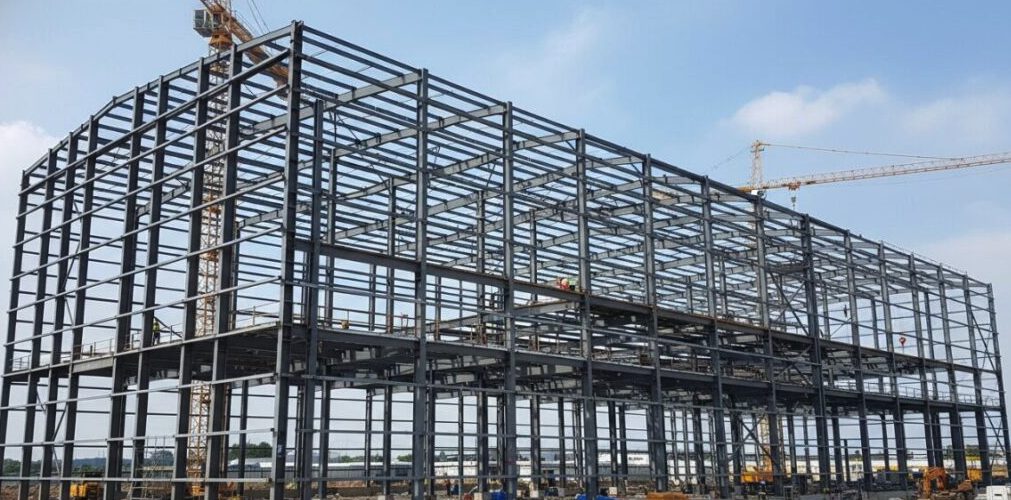
Classification by section shape
The physical geometry of the steel directly determines how the stress is distributed. In actual operation, we will not just grab a section steel, but match it accurately according to the application scenario.
Wide Flange I-Beam
This thing is the “main force” of modern architecture “. Wide flange I-beams are specially designed for main load-bearing. Their flanges are very wide and provide a huge surface area, which is very suitable for carrying heavy vertical loads in building frames and bridge construction. If you want to build a multi-story frame, W-shaped steel is definitely your first choice.
Ordinary I-Beam
Many people confuse S-Beams with W-Beams. Standard I-beam (S-steel) is characterized by sloping flanges (thick inside and thin outside). It is usually used in some structures with special requirements for depth and weight ratio, or in some small professional frames that do not require the size of H-beam.
Channel Steel
The section of the channel steel is like a “C. On the construction site, we often use it as secondary beams or auxiliary frames, such as floor joists, wall columns, or reinforcements that do not require full-size girder support. They are light and easy to install, and are a sharp weapon for balancing strength and self-weight.
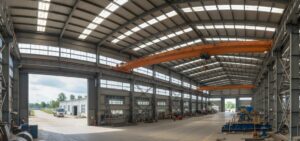
Steel Structure Workshop
Steel Structure Workshops offer versatile designs. Clear Span ensures unobstructed space, while Centre and Intermediate Columns provide economical solutions for wide spans.
Bridge/Steel Structure Bridgeipsum
Steel Structure Bridges utilize high strength-to-weight ratios to achieve long spans where intermediate supports are difficult.Their versatility makes them essential for critical infrastructure connectivity.
Steel Structure Buildings
Steel Structure Buildings feature versatile designs to meet diverse needs. Clear Span offers open space, while Centre and Intermediate Columns increase economy for large spans. Multi Gable accommodates complex widths.
Angle Steel
This is what we often say “angle iron”, the cross-section is L-shaped. They are mainly used for supporting or connecting other main components. In the truss system or frame grid, the angle steel can transmit the lateral force very effectively, maintain the structural stability, and prevent the building from “shaking” under the lateral load “.
Structural Hollow Section
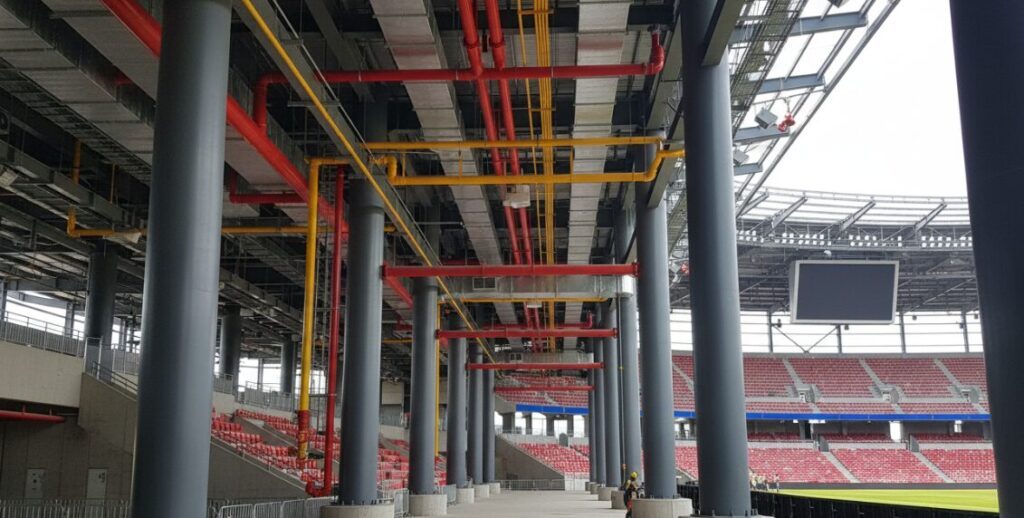
Including square tube, rectangular tube and round tube. According to my observation, HSS is becoming more and more popular now, especially to do pillar. Because they are hollow, the force in all directions is relatively uniform, and the appearance is neat, many exposed architectural aesthetic structures (such as airport terminals) are named to use this material.
Classified by material grade
In addition to shape, the chemical composition of a material determines its mechanical properties. If you choose the wrong grade, even if the shape is right again, there will be problems with structural integrity.
Carbon Steel-ASTM A36
A36 is the most common grade, can be said to be the industry’s “golden oil”. It has good welding performance and toughness, and the key is cheap. If your project doesn’t have that kind of extreme high load, the A36 is usually the standard answer.
HSLA Steel-ASTM A572 & A992
When the project has higher performance requirements, we have to turn to HSLA steel: ASTM A572: Commonly used in bridges and heavy equipment, it has a yield strength 1 more than that of A36. ASTM A992: It must be emphasized that it is now basically the standard configuration of wide flange I-beams in buildings. Its high strength-to-weight ratio allows you to design buildings lighter and more efficient without sacrificing safety.
What kind of steel should I choose?
Material selection is by no means as simple as checking the manual. As a consultant to a responsible person, I usually review from the following core points:
Stress analysis: first find out whether the component is in tension, compression or torsion. If it is a stressed column, I personally prefer HSS. If it is a beam with a large span, W-shaped steel is definitely preferred.
Weldability: In complex prefabrication processes, the carbon equivalent of the steel must be up to standard. If the welding performance is not good, the on-site weld cracking can make you a headache, which is directly related to the construction quality.
Tensile strength requirements (Tensile Strength): Especially in high-rise buildings or heavy-duty bridges, the choice of material grade (such as A992 vs. A36) is the key to determining safety redundancy.
You should optimize the amount of materials as much as possible on the premise of ensuring safety, and all you save is real money.
To sum up, the steel structure is not a simple “building blocks”. Understanding the shape and grade of this “combination of boxing”, you can ensure the stability of the structure at the same time, make the most economical and reasonable plan.
Author: Robert Vance
With over 12 years of hands-on experience managing large-scale steel structure projects, I’ve seen firsthand how the right material choice can make or break a building’s integrity. My expertise lies in bridging the gap between complex engineering manuals and practical on-site application. I specialize in optimizing structural designs by balancing cross-sectional geometry with material chemistry, ensuring that every project I consult on is both structurally sound and economically efficient.
The prev: What Is Structural Steel Used ForThe next: How Structural Steel Is Made
Related recommendations
-

What Type Of Steel Is Used In Bridges
24Explore Bridge Steel Grades Like ASTM A709, A588, And HPS 70W. Learn Why Toughness And Dynamic Load Resistance Matter.
View details -
How Long Does It Take To Build A Prefabricated Home
12Build Your Home In 12-24 Weeks! Learn How Our Prefab Process Saves 50% Of The Time Vs. Traditional Construction.
View details -
How To Anchor Steel Building To Ground
213Secure Your Steel Building To Concrete Or Soil. Learn Professional Anchoring Methods For Maximum Stability.
View details -
How Long Do Steel Frame Buildings Last
244Discover Why Steel Buildings Last 100+ Years. Learn About G90 Galvanization, Rot Resistance, And Structural Longevity.
View details


HelloPlease log in