
 GAOERJI STEEL


Search
Is Steel Structure Cheaper Than Concrete
The simple answer is yes. If you look only at those one or two material purchase orders, reinforced concrete is indeed about 10% to 15% cheaper than steel construction. But you can’t just focus on this one aspect when doing the accounting. Once you factor in the 30% reduction in labor costs, the remarkably fast construction schedule, and the simplified foundation requirements, steel construction often turns out to be the more cost-effective option.
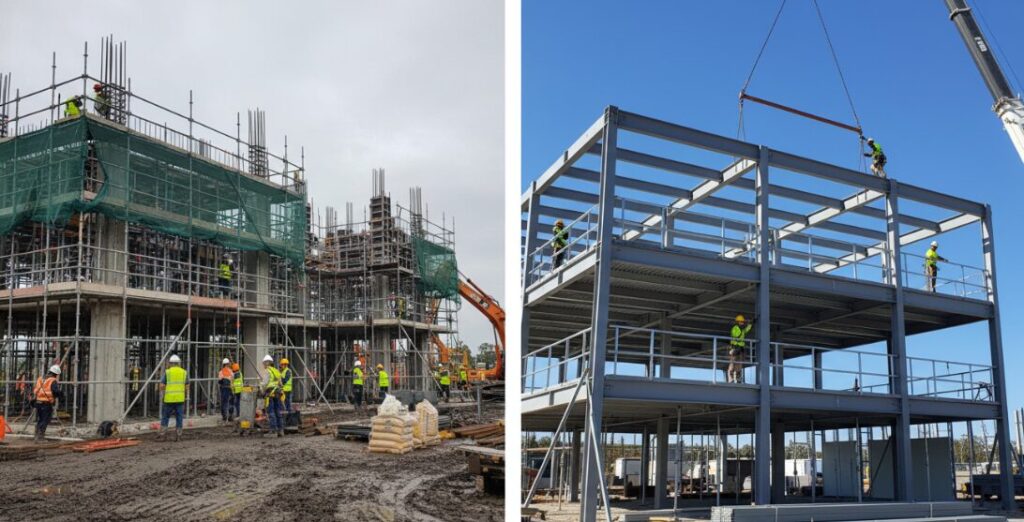
When we talk about “cost-effectiveness” here, we’re not just comparing the unit prices of cement and I-beams; we’re considering the project’s total cost of ownership. The prefabricated nature of steel structures significantly shortens the project timeline, which means you’ll pay less in loan interest for several months and be able to take possession of your home sooner. In contrast, while concrete offers better thermal insulation and requires less maintenance over the long term in residential applications, it entails a significant upfront capital outlay that remains tied up for an extended period.
Don’t Focus Solely On Raw Materials
If you only look at the price quotes of concrete and rebar, you might conclude that steel structures are expensive. But understand that material cost is just a small piece of the puzzle.
In today’s construction landscape, opting for steel-framed solutions like those offered by Wedospace is essentially an investment in a highly efficient financial system. Steel prices are transparent and easy to forecast, and factory-prefabricated components achieve extremely high precision. This directly eliminates the “hidden waste” that often occurs during on-site concrete pouring, as well as rework costs caused by dimensional inaccuracies. In my view, this “certainty” is worth a great deal in budget control.
Prefabrication Vs. On-Site Chaos
One of the most capital-intensive components of residential construction is labor-intensive work. Working with concrete is really tough: you have to set up formwork, tie rebar, pour the concrete in sections, and then go through a long curing process. At every step, you need a large crew of skilled workers on site, tied up for extended periods.
In contrast, with steel structures, labor costs can be reduced directly by 30%. The main components are fabricated in a factory setting:
- There are very few people working on site: only a small installation team is needed, and they just need to tighten the bolts like building blocks.
- Precision Engineering: Beams and columns are delivered to the job site perfectly aligned, eliminating the need for on-site fitting and adjustments.
- Extremely low tolerance for error: Industrialized quality control ensures you don’t have to pay for the common, low-level mistakes that often occur with manual concrete pouring.
Steel Structure Workshop
Steel Structure Workshops offer versatile designs. Clear Span ensures unobstructed space, while Centre and Intermediate Columns provide economical solutions for wide spans.
Bridge/Steel Structure Bridgeipsum
Steel Structure Bridges utilize high strength-to-weight ratios to achieve long spans where intermediate supports are difficult.Their versatility makes them essential for critical infrastructure connectivity.
Steel Structure Buildings
Steel Structure Buildings feature versatile designs to meet diverse needs. Clear Span offers open space, while Centre and Intermediate Columns increase economy for large spans. Multi Gable accommodates complex widths.
Rapid Assembly, Move In Ahead Of Schedule
In the real estate development industry, the completion date is a core financial metric. If your project remains under construction for another month, you’ll have to pay an additional month’s bank interest, and you still won’t be collecting any rental income.
Steel structures can be assembled at an astonishingly rapid pace, eliminating the need to wait several weeks for them to achieve structural strength, as is required with concrete. As soon as the steel structure bolts are tightened, they reach full-load strength. This means:
- Significant interest savings: Shortening the project schedule by 2 to 4 months can directly reduce financing costs by tens of thousands, or even hundreds of thousands, of U.S. dollars.
- Rapid capital recovery: For developers, handing over the keys one day earlier means shifting from a “cash-burning” phase to a “cash-collecting” phase that much sooner.
The Neglected “Cost-Saving Item” In Foundations
There is a cost factor that is often overlooked: the building’s own weight. The strength-to-weight ratio of steel structures is much higher than that of concrete structures.
Because the steel frame is lightweight, it exerts much less pressure on the ground. This is directly reflected in the money:
- Lowered foundation requirements: You can use a smaller, simpler foundation.
- A Lifesaver for Poor Soils: In areas with challenging soil conditions, a heavy concrete building would typically require deep pile foundations, driving up construction costs significantly. In contrast, a lightweight steel structure may only need a standard shallow foundation, making it a more cost-effective solution.
Spatial Flexibility And Future Value Appreciation
Steel structures can achieve large-span layouts, which are either impossible or prohibitively expensive to realize with concrete structures. For residential development, this is highly commercially valuable:
- Open floor plan: Modern buyers love this layout, as it can directly boost a home’s sale price or rental income.
- Simple future renovations: Since the interior features almost no load-bearing walls, you can easily reconfigure the room layout without ever touching the building’s structural core.
Make Smart Investment Decisions
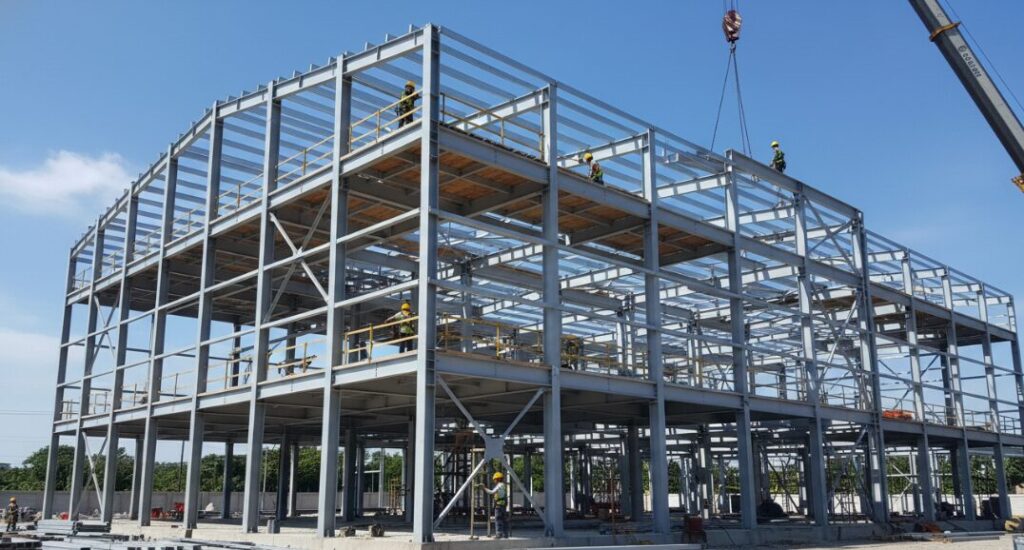
If you only look at the price of those bags of cement, concrete does indeed seem “cheap”. If you are a savvy developer who can carefully weigh labor efficiency, construction schedule, and long-term financial flexibility, steel construction is undoubtedly the clear winner.
At Wedospace, our focus is on seamlessly integrating high-standard structural engineering with cost-effective construction execution. Leveraging the inherent advantages of steel structures, we help clients shorten project timelines. Ultimately, this enables you to maximize your project’s return on investment.
Author: Marcus Steve
“Hi, I’m a senior project consultant at Wedospace. With over a decade of experience in residential development and structural engineering, I’ve helped numerous homeowners and developers navigate the complex financial trade-offs of modern construction. I’m passionate about moving beyond simple material quotes to look at the bigger picture—total ROI.”
The prev: How Structural Steel Is MadeThe next: What Type Of Steel Is Used In Bridges
Related recommendations
-

How To Clad A Steel Frame Building
155Master How To Clad A Steel Frame Building With Our Guide On Membranes, Panel Installation, And Weatherproofing.
View details -
How Long Does It Take To Build A Prefabricated Home
12Build Your Home In 12-24 Weeks! Learn How Our Prefab Process Saves 50% Of The Time Vs. Traditional Construction.
View details -
How Long Does It Take To Erect A Steel Building
267A 5,000 Sq Ft Steel Building Takes 5-7 Days To Erect. Discover Why The Full Project Timeline Is Typically 12-16 Weeks.
View details -
Why Is Steel Used To Make Bridges
51Discover Why Steel Is The Backbone Of Modern Bridge Engineering. Learn How Its High Strength, Ductility, And Structural Flexibility Ensure Long-Lasting, Safe, And Efficient Infrastructure.
View details



HelloPlease log in