 GAOERJI STEEL


Search
How To Paint A Steel Building
To paint a steel building effectively and ensure a durable finish, you must follow a strict four-step process: surface preparation, rust restoration, priming, and top-coating. Start by power washing the structure with a Trisodium Phosphate (TSP) solution to remove oxidation and grease. Next, remove loose rust with a wire brush and immediately treat bare spots with a rust-converter. Then, apply a high-quality “Direct-to-Metal” (DTM) bonding primer to ensure adhesion. Finally, use an airless sprayer to apply two coats of 100% premium Acrylic Latex paint (ideal for thermal expansion) when ambient temperatures are between 50°F and 90°F.
You can watch this video to see how to properly prepare a metal building for painting:
Step 1: Surface Pretreatment With TSP
The most critical step in learning how to paint steel structures begins before the first drop of paint hits the ground.
The steel structure is exposed to the sun and the wind outside. Over time, the surface will accumulate a layer of oxide (our jargon is called “pulverization”), plus oil, dust and mold. If you cover the paint directly on these dirty things, I dare to make a ticket, it won’t be long before the paint will peel off.
To treat the base surface thoroughly, you must use a solution of trisodium phosphate (TSP). TSP is the kind of strong cleaning degreaser, it has a good thing, is that it can specifically deal with the stubborn layer of powder residue on the old metal plate.
Solution preparation: Mix TSP and warm water together according to the manufacturer’s instructions.
High pressure cleaning: must be on the high pressure cleaning machine. The mechanical impact of water and the chemical action of TSP can strip down the old scale and oxide layer.
Rinse thoroughly: After washing, rinse the entire building times with clean water. This is very important. If there is any soap left, the primer will not hang on and the previous work will be wasted.

Step 2: Rust Repair And Treatment
When the building is clean and dry, don’t move the paint in a hurry. Turn around the outer wall 1 first to check for corrosion. You must never paint directly on the rust. If you don’t deal with it, the rust will continue to spread under the new coating, and then it will be rotten inside.
Mechanical rust removal: find a wire brush (manual or electric drill head is fine) and brush it hard at those places with loose rust or peeling. It is not necessary to wear off every small discolored spot, but it must be ensured that the surface is tight and there is no slag that will fall off 1 touching.
Use rust transfer agent: Immediately apply industrial grade rust transfer agent to the exposed areas that have been brushed. This is different from ordinary primer. It can chemically react with iron oxide and convert rust into an inert black protective film. This step can directly “fix” the corrosion process and give your primer a solid foundation.
Step 3: Spray DTM (Direct To Metal) Bonding Primer
There are no pores on the surface of the steel plate, unlike wood that can absorb paint, and ordinary household primer is not firm at all. For the finish to last, you must use a “direct to metal” (DTM) bonding primer.
The formula of DTM primer is specially designed to “bite” the metal surface, and the adhesion and anti-corrosion performance are not to be said.
Cover in place: Make sure that the primer covers all areas, especially the areas just treated with rust conversion agent.
Oily or water-based? Although there are water-based DTM primers now, you have to see that they are not compatible with your topcoat. Our goal was to create a uniform, sticky surface and deadlock the last layer of paint to the steel plate.
Step 4: Use 100% Acrylic Latex Paint As The Topcoat
Steel Structure Workshop
Steel Structure Workshops offer versatile designs. Clear Span ensures unobstructed space, while Centre and Intermediate Columns provide economical solutions for wide spans.
Bridge/Steel Structure Bridgeipsum
Steel Structure Bridges utilize high strength-to-weight ratios to achieve long spans where intermediate supports are difficult.Their versatility makes them essential for critical infrastructure connectivity.
Steel Structure Buildings
Steel Structure Buildings feature versatile designs to meet diverse needs. Clear Span offers open space, while Centre and Intermediate Columns increase economy for large spans. Multi Gable accommodates complex widths.
At this last step, 100% high-quality acrylic latex paint must be used.
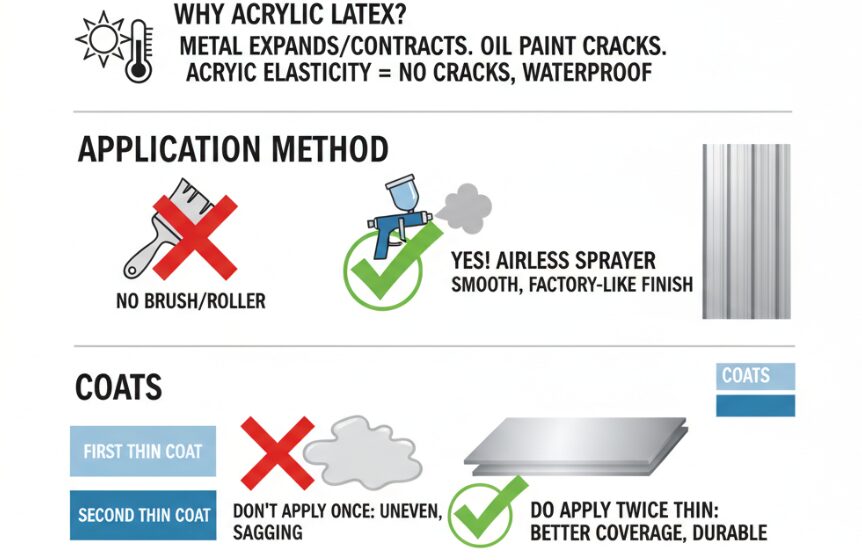
Why use acrylic latex? If you think about it, steel buildings are more sensitive to temperature. When the sun 1, the metal expands; at night, it contracts again. If you use oil paint, it will become hard and brittle after curing. When the metal moves, it will crack and peel off. And 100 percent acrylic latex paint itself is elastic, it can stretch together with the steel plate, always maintain waterproof sealing.
Construction method: don’t use roller or brush. Metal plates usually have stiffeners and corrugations, which are difficult to coat evenly with a hand brush. Directly on the airless spraying machine, the spraying effect is smooth and smooth, the same as the factory.
Spray it twice: don’t try to apply it times to save trouble, it is easy to sag and do it unevenly. Honestly spray twice thin, cover better, more durable.
Best construction environment
Finally, pay attention to the day. For this job, the temperature must stabilize between 50 °F and 90 °F (about 10°C to 32°C).
Below 50 °F (10°C): Incomplete curing of paint, resulting in adhesion failure.
Above 90 °F (32°C): The surface of the steel plate is too hot, the paint dries too quickly, and it is prone to brush marks, blisters, or poor adhesion.
Author: Jason Miller
” With Over 17 Years Of Experience In Industrial Coating And Metal Restoration, I Specialize In Helping Property Owners Extend The Lifespan Of Their Structures. My Expertise Focuses On Proper Surface Preparation, Rust Remediation, And Selecting The Right DTM Systems For Long-Term Durability.”