 GAOERJI STEEL


Search
How To Insulate A Steel Building
To insulate a steel building effectively, you must prioritize a continuous vapor barrier to prevent condensation. The useful is a hybrid approach: first, install a radiant barrier (bubble foil) directly against the metal skin as a thermal break, followed by R-13 fiberglass batts or rigid foam boards for maximum climate control.Other methods for thermal insulation of steel structure buildings include:
Spray Foam Insulation (Closed-Cell): The premium “one-and-done” solution. It provides the highest R-value, acts as a perfect air seal, and adds structural rigidity, though it often requires professional installation.
Fiberglass Blanket/Batt Insulation: The most cost-effective and common DIY option. It must be installed with a high-quality vapor barrier facing to prevent moisture from hitting the cold steel.
Rigid Foam Boards: Excellent for preventing thermal bridging. These are typically installed between furring strips and sealed with specialized tape for a clean, professional finish.
Mixed Insulation Method
When dealing with steel insulation, condensate is your biggest enemy. Due to the extremely fast heat conduction of metal, the temperature difference between indoor and outdoor is slightly larger, and the metal surface will begin to “sweat”.
The hybrid solution works well because it builds a multi-layered defense system. You first stick a layer of aluminum foil on the steel skin, which can quickly reflect most of the radiant heat and form an immediate thermal break bridge. The glass fiber cotton or hard board followed up behind provides the necessary thermal quality to ensure stable indoor temperature. This double-layer system can achieve the best temperature control effect without the high cost of professional construction.
Closed-Cell Spray Foam
Closed-mouth spray foam will expand rapidly when sprayed, filling all the corners, gaps and dead corners on the steel frame.
Extremely high R value: its unit thickness insulation efficiency is higher than any other material, especially suitable for extreme climate areas.
Fully sealed barrier: It can form a perfect air seal, completely eliminate the wind, and do not let the humid air have any chance to contact the metal surface.
Increase structural strength: The foam is as hard as stone after curing, which actually enhances the structural rigidity of your metal wall in disguise.
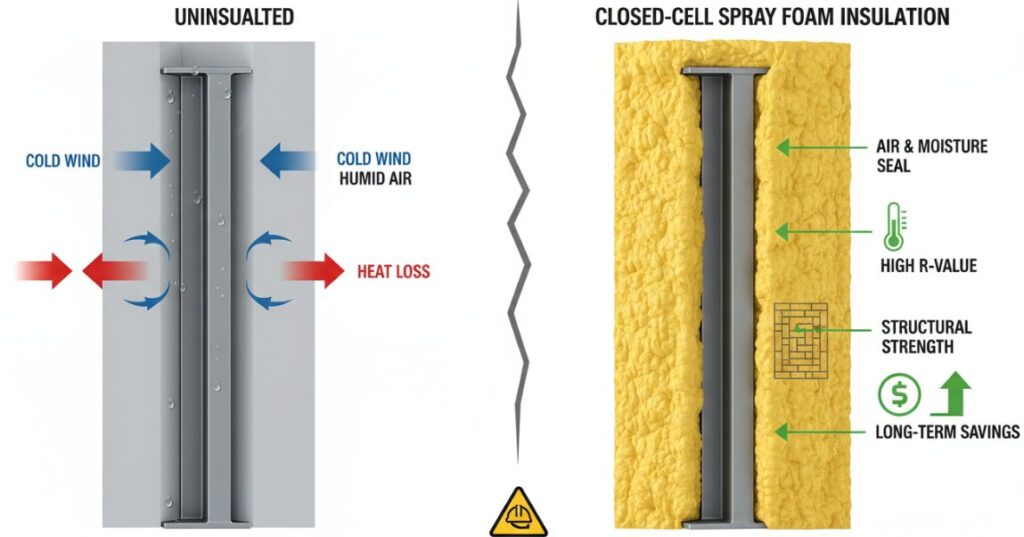
One caveat: Although it is the most expensive option and requires a professional team to bring equipment to spray, considering the long-term electricity bills it can save, this initial investment is often cost-effective.
Glass Fiber Blanket/Cotton
In the civil and light commercial steel structure, glass fiber cotton is still the most common choice, after all, it is cheap, and anyone can get started.
To make good use of this thing in the steel structure, the key is all on that layer of “vapor barrier veneer. You must ensure that the side with a high-quality reinforced veneer (such as white foil or polyethylene) faces the side of the room for heating. IThe veneer was not well done or was installed upside down. The indoor moisture got into the cotton and met the cold steel plate with direct condensation. Finally, the cotton body collapsed due to moisture and the insulation R value returned to zero directly. As long as it is installed in place and packed tightly, its heat and sound insulation performance is actually excellent.
Steel Structure Workshop
Steel Structure Workshops offer versatile designs. Clear Span ensures unobstructed space, while Centre and Intermediate Columns provide economical solutions for wide spans.
Bridge/Steel Structure Bridgeipsum
Steel Structure Bridges utilize high strength-to-weight ratios to achieve long spans where intermediate supports are difficult.Their versatility makes them essential for critical infrastructure connectivity.
Steel Structure Buildings
Steel Structure Buildings feature versatile designs to meet diverse needs. Clear Span offers open space, while Centre and Intermediate Columns increase economy for large spans. Multi Gable accommodates complex widths.
Hard Foam Board
Rigid foam board (such as EPS, XPS or Polyiso) is an excellent substitute for projects that seek smooth, clean walls and have high requirements for moisture resistance.
The biggest advantage of this kind of plate is to resist the “thermal bridge effect”. Steel beams transfer heat too fast, and by adding leveling strips to the steel components and laying foam boards, you can create a completely uninterrupted insulation layer.
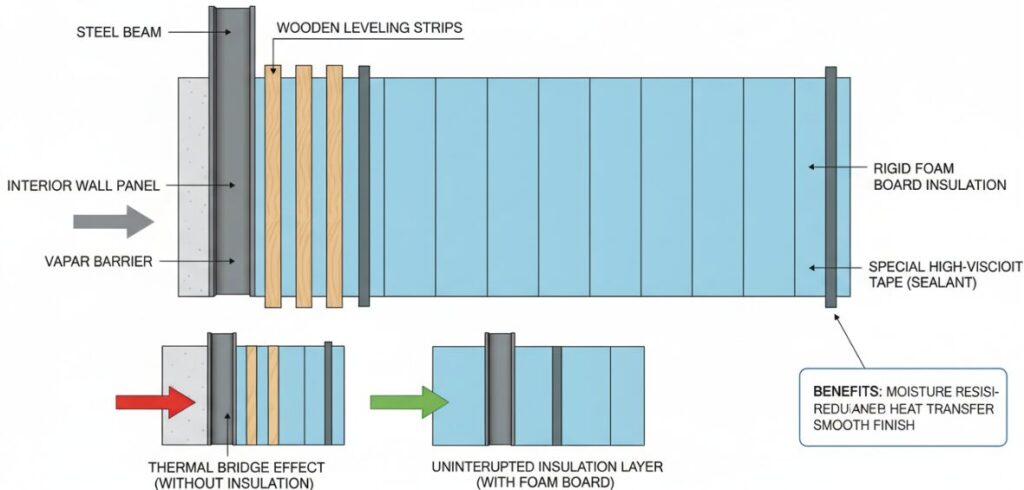
Installation process: cut the plate and fix it on a wooden strip or pendant.
Professional appearance: The surface of the foam board is flat, which is very convenient if you want to install the interior wall hanging board behind you; if the joints are treated beautifully, it can be exposed directly.
Sealing treatment: if you want it to really play the role of vapor barrier, every seam must be sealed with a special high-viscosity tape.
Author:Mike
“As a construction professional specializing in metal structures, I have spent years helping building owners solve the unique challenges of steel building climate control. My focus is on providing practical, high-performance insulation strategies—from the ‘gold standard’ hybrid approach to advanced vapor barriers—to ensure your structure remains dry, energy-efficient, and rust-free for decades.”