
 GAOERJI STEEL


Search
How To Build A Steel Bridge
The construction of steel bridges is an extremely systematic process, with every step rigidly bound to the laws of structural engineering. I am used to dividing the whole project into 5 core stages:
- Geotechnical assessment and design: detailed soil testing to find out the bearing capacity of the foundation, and accurate CAD drawings according to the net span requirements.
- Substructure construction: excavation and pouring of reinforced concrete foundation, construction of solid abutment, the weight of the bridge safely and stably transmitted to the earth.
- Material selection and prefabrication: Select suitable structural steel (such as weathering steel or galvanized I-steel), and prefabricate steel beams or truss systems in a controlled factory environment in advance to cope with later tension and pressure.
- Hoisting and splicing: transport the components to the site, use heavy equipment for hoisting, and finally use high-strength bolts and professional welding to fix the structure.
- Deck Paving and Filing: Bridge decks (wood or steel grate, etc.) are installed and subjected to rigorous final acceptance to confirm that the structure is absolutely complete and in compliance with local codes and ASCE standards.
If you want to thoroughly understand how the steel bridge was built, you can’t get around any of these five engineering stages. Let’s break up the whole construction process one by one.
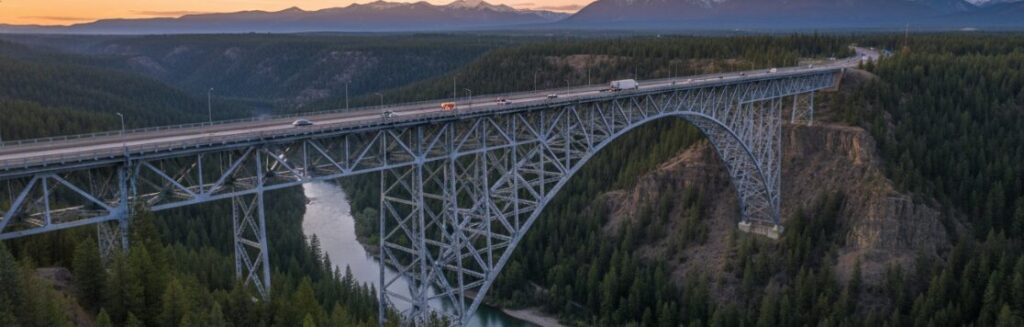
Step 1: Geotechnical Assessment And Design
The foundations of any successful steel bridge are shaped long before the first of steel is cut. Geotechnical assessment is an absolute priority. After we have decided on the location, the first thing is to do a comprehensive soil test. To be honest, this set of data is used to guarantee the bottom-it must be used to calculate the precise bearing capacity of the foundation to ensure that the land below can hold the huge weight of the bridge itself and the future traffic load, and there will be no fatal slippage or settlement.
Only when the geological survey data were obtained did the structural engineer begin to cut into the design link. We will use professional software to build a high-precision CAD blueprint. The parameters of this set of drawings are carefully calculated based on the “net span” required by the project (that is, the suspended distance between the support points without obstacles). The design directly finalized the precise geometric configuration of the bridge, ensuring that it can not only safely cross obstacles, but also withstand the destruction of various environmental stresses.
Step 2: Construction Of Substructure
After the drawings were finalized and the disclosure was made, the scene began to be real. No matter how strong the steel bridge itself is, it depends on the stability of the “lower plate”.
This stage is large-scale heavy excavation until a stable bearing layer is dug. Then the construction team will pour the reinforced concrete foundation, which is the needle of the whole project. After the foundation is laid, we will build strong abutments at both ends of the bridge span. In structural physics, the role of abutments is very straightforward: they are specifically designed to safely and evenly transmit the dead load (steel dead weight) and live load (cars and people crossing the bridge) of the earth. If the concrete marking and maintenance are not closely watched in this step, the hidden dangers behind cannot be recovered at all.
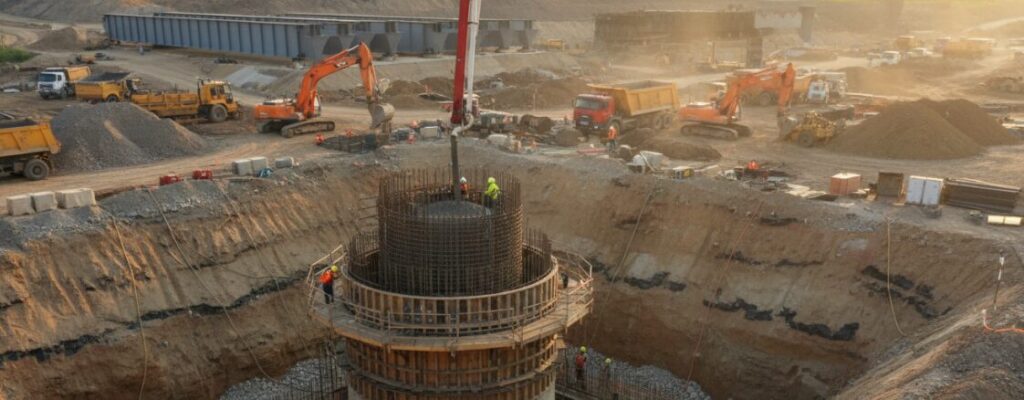
Step 3: Material Selection And Prefabrication
To understand how to build a steel bridge, one must essentially understand metallurgy and physics. Material selection is directly related to how many years the bridge can live. We usually specify high-grade structural steel, such as weather-resistant steel (the surface can form a protective film similar to rust to resist corrosion) or galvanized I-steel (the surface has a zinc layer to prevent rust).
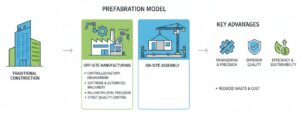
On the current construction site, few people have knocked from scratch, and the “skeleton” of the entire bridge is basically prefabricated. Steel beams and those complex truss systems are cut, formed and pre-assembled in a controlled factory environment. You have to dig millimeter-level accuracy. Once these steel components are put on the bridge, they must deal with the specific pulling force and pressure in a real way, and control the quality in the factory is much more reliable than on the open-air construction site.
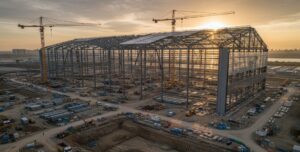
Steel Structure Workshop
Steel Structure Workshops offer versatile designs. Clear Span ensures unobstructed space, while Centre and Intermediate Columns provide economical solutions for wide spans.
Bridge/Steel Structure Bridgeipsum
Steel Structure Bridges utilize high strength-to-weight ratios to achieve long spans where intermediate supports are difficult.Their versatility makes them essential for critical infrastructure connectivity.
Steel Structure Buildings
Steel Structure Buildings feature versatile designs to meet diverse needs. Clear Span offers open space, while Centre and Intermediate Columns increase economy for large spans. Multi Gable accommodates complex widths.
Step 4: Hoisting And Splicing
This is the most visually striking step in the whole project. To transport large prefabricated steel components from the factory to the site, this logistics alone requires an extremely bald scheduling plan. Sometimes it is more stressful to transport these giant steel beams of tens of tons under complicated road conditions than hoisting on the spot.
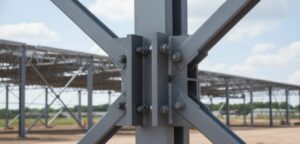
After the components enter the site, the heavy equipment should be on. We commanded the crane at the scene to carry out precise lifting and put the steel members into the predetermined position on the bridge abutment bit by bit. In order to fix these behemoths, the construction team will use high-strength bolts with professional welding operations. This kind of connection can ensure that the individual prefabricated parts are tightly snapped together, and finally form a rigid and indestructible overall structure skeleton.
Step 5: Deck Pavement And Finishing
The last stage is to turn the cold steel skeleton into a real functional channel. Bridge deck pavement is the installation of the actual driving or walking surface. According to different usage scenarios, I will arrange different types of bridge decks: if it is a landscape bridge or a rural road, anti-corrosion boards may be laid; If you are dealing with heavy-duty industries or expressways, you must go to a steel grid or a composite bridge deck filled with concrete, so as to withstand the huge friction and load.
The process of building the steel bridge is not over here. Before any traffic is released, the entire bridge has to survive an extremely demanding round of final acceptance. Engineers must check the connecting nodes one by one, test the bearing capacity and review the overall construction quality to ensure structural integrity. Finally, the bridge must be certified, confirming that it absolutely meets the local building codes and the rigorous engineering standards set by the local. After all these processes, the steel bridge is truly qualified for safe and long-term service.
Author: David Thorne
I am a veteran structural engineer with over 10 years of experience specializing in heavy infrastructure and bridge construction. Throughout my career, I have overseen the design, fabrication, and site management of numerous steel bridge projects across the country. My passion lies in translating complex structural engineering concepts into practical, safe, and efficient building processes.
The prev: canopy for gas stationThe next: Are Steel Buildings Cost Effective
Related recommendations
-

What Is The Main Advantage Of Structural Steel
16Discover Why Steel Structures Offer Superior Strength, Faster Construction, And Long-Term Value For Modern Engineering.
View details -
How To Reduce Vibration In Steel Structure
15Master Steel Structure Vibration Control Using Stiffness, Damping, And Design Guide Standard For Stable Buildings.
View details -
What Is A Prefabricated Building
252What Is A Prefabricated Building? Learn How Offsite Manufacturing Reduces Timelines By 50% And Ensures Top Quality.
View details -
What Are The Advantages And Disadvantages Of Steel Structures
24Discover The Pros, Cons, And ROI Of Steel Structures For Large Projects. Learn Key Fire And Corrosion Safety Solutions.
View details


HelloPlease log in