 GAOERJI STEEL


Search
How Long Does Hot Dipped Galvanized Steel Last
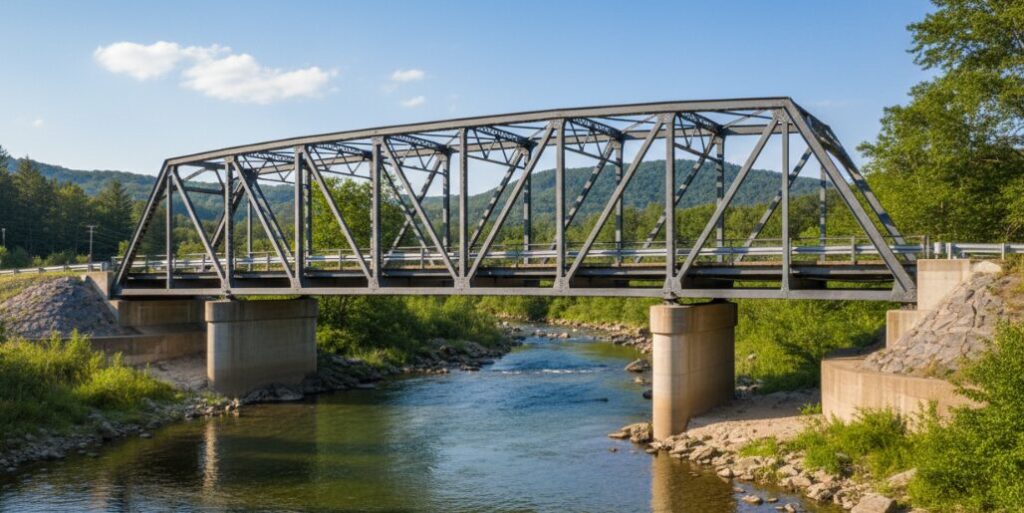
The standard answer to this question is quite hard: in rural environments, hot-dip galvanized steel can usually last 50 to 100 years; Even in the high-corrosion industrial or coastal areas of C4/C5, supporting 20 to 50 years to reach the “initial maintenance time” is also a basic operation. This long life is determined by two core factors: one is the thickness of the zinc layer according to ASTM A123 or ISO 1461 standards, and the one is the stable zinc rust on the surface, which can reduce the corrosion rate to a very small fraction of bare steel. This metallurgical bond formed in the molten zinc bath not only provides a physical barrier, but also brings sacrificial protection. Until the zinc layer is depleted and the base steel is exposed, the entire structure is virtually maintenance-free. For large industrial applications, this ensuring an unmatched return on investment (ROI).
The “initial maintenance time” of hot-dip galvanized steel
The common measure in the industry is the initial maintenance time. There is a misunderstanding that needs to be corrected: Initial maintenance time does not represent the end of steel life, but refers to the node with 5% rust on the surface of the base steel. At this point, we usually recommend maintenance painting to continue to extend the service life of the structure.
For Wedospace customers, understanding initial maintenance time is critical to full life cycle cost analysis. You should know that ordinary paint systems may need to be repainted every 5 to 10 years, while hot-dip galvanized steel provides a zero-maintenance window that lasts for decades and does not need to worry about.
The Decisive Role Of Environmental Categories
The service life of hot-dip galvanized steel depends to a large extent on the “lot” in which it is located “. According to the classification of ISO 9223, we can see clearly:
Rural environment (C1-C2): The sulfur dioxide and salt levels here are extremely low. In such a place, hot-dip galvanized steel can easily live for 100 years. Due to the lack of aggressive contaminants, the passive film on the surface of the zinc layer is hardly disturbed.
Industrial and coastal environments (C4-C5): In areas with high humidity, salt spray or chemical emissions, the corrosion rate of zinc will naturally increase. But even under these extreme conditions, the thick coating can still guarantee 20 to 50 years of TFM. For performance in harsh environments, hot-dip galvanizing almost hangs all other protective coatings.
Steel Structure Workshop
Steel Structure Workshops offer versatile designs. Clear Span ensures unobstructed space, while Centre and Intermediate Columns provide economical solutions for wide spans.
Bridge/Steel Structure Bridgeipsum
Steel Structure Bridges utilize high strength-to-weight ratios to achieve long spans where intermediate supports are difficult.Their versatility makes them essential for critical infrastructure connectivity.
Steel Structure Buildings
Steel Structure Buildings feature versatile designs to meet diverse needs. Clear Span offers open space, while Centre and Intermediate Columns increase economy for large spans. Multi Gable accommodates complex widths.
Why Is It So Resistant?
The reason why hot-dip galvanized steel is much more durable than bare steel or painted steel is ultimately due to its unique double-layer protection mechanism.
The first is the physical barrier. The zinc immersion process is not only coated with a film, it actually produces a series of zinc-iron alloy layers, the outermost layer is pure zinc. This is a metallurgical bond rather than a simple surface adhesion. This means that it is very wear-resistant and bump-resistant during transportation and installation.
The second is cathodic protection. This is the “life-saving charm” of hot-dip galvanizing “. If the plating is accidentally scratched or damaged, the surrounding zinc will spontaneously protect the exposed base steel by sacrificial corrosion. This directly eliminates the common “rust spread” problem on the paint surface.
Finally, there is an “invisible hero”: Zinc Patina. Over time, zinc reacts with oxygen, moisture, and carbon dioxide to form basic zinc carbonate. This stable, inactive film acts like a bulletproof vest on the steel, further slowing the corrosion process.
International Standards For Seizure
If you want to get the life span of 50 to 100 years mentioned above, you should never inject water. For heavy-duty industrial applications, a coating thickness of 85 microns is the baseline.
Ensuring that your steel components comply with ASTM A123 (commonly used in North American projects) or ISO 1461 (commonly used internationally) is to ensure that the zinc-iron alloy layer has reached a density sufficient to withstand decades of environmental attack. In the Wedospace, we repeatedly emphasize these standards, because the standard is in place, the initial investment can be converted into real durability.
Maximize Return On Investment For Large Industrial Applications
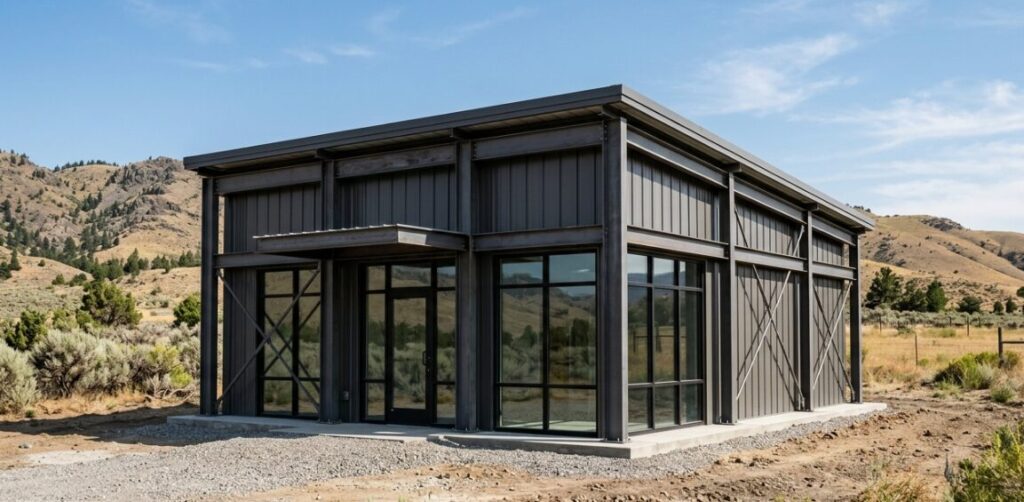
The life of hot-dip galvanized steel translates directly into ROI on financial statements. Although the initial cost of hot-dip galvanizing may be similar to that of a high-quality multi-layer paint system, considering the advantages of zero maintenance costs for more than 50 years, it is clearly a more cost-effective solution in the following areas:
- Building Steel Frame
- Industrial Shelf and Storage System
- Coastal infrastructure
- Traffic and Bridge Components
When you choose hot-dip galvanized steel, you buy a structure that doesn’t need to be managed until the zinc layer is naturally consumed-which usually takes a lifetime. This is still the most worry-free choice in the engineering community right now.
Author: Alex Chen
Hi, I have dedicated my career to analyzing the long-term performance and durability of industrial materials. My expertise focuses on helping engineers and purchasing professionals maximize their ROI through maintenance-free solutions like hot-dip galvanizing. At Wedospace, I strive to bridge the gap between technical standards and practical, cost-effective engineering outcomes.
Related recommendations
-

What Are The Advantages Of Steel Framed Buildings
94Discover How Steel Framing Maximizes ROI Through Durability, Fire Resistance, And Rapid Construction Timelines.
View details -
Differences Between H-Beam, C-Channel, and Z-Channel Steel
315Shaped like the letter “H,” it provides excellent load-bearing capacity and is commonly used for main factory frames, bridges, and high-rise structures. Lightweight and shaped like the letter “C,” it is often used for roof purlins and wall be...
View details -
Can Steel Buildings Withstand Hurricanes
231Yes, Steel Buildings Withstand 170+ Mph Winds. See How Ductility And Continuous Load Paths Ensure Structural Survival.
View details -
How To Build A Steel Bridge
32Learn The 5 Steps Of Steel Bridge Construction: From Geotechnical Assessment And Prefabrication To Final Inspection.
View details


HelloPlease log in