 GAOERJI STEEL


Search
How Long Do Steel Buildings Last
Steel buildings typically last 50 to 100 years or more with proper construction and maintenance. Steel offers inherent resistance to moisture, pests (termite), mold, and fire, which allows them to serve for generations. However, it depends heavily on material quality (such as steel gauge and coating type), environmental factors (specifically exposure to salt air or high humidity), and consistent upkeep like painting and cleaning. In short: while the structural skeleton is virtually indestructible, the building’s longevity is a direct reflection of its protective coatings and maintenance schedule.
Reasons For The Long Service Life Of Steel Structures
The fundamental reason is that they have a natural immunity to the forces that spoil other materials. Steel is inorganic. This directly circumvents the most troublesome structural failure problems in traditional buildings:
- Insect resistance: termites, carpenter ants, wood borers, these little things can’t chew steel. This completely eliminates the kind of old-fashioned wooden buildings due to structural decay caused by the hidden dangers.
- Immune to moisture and mold: Steel does not absorb water. This means that it will not swell, deform or rot like wood. And, because it doesn’t lock in water, mold can’t grow on it at all, which is good for protecting structural integrity and maintaining indoor air quality.
- Fire resistance: steel is a non-combustible material. In the event of a fire, the steel frame acts more as a barrier than as a fuel. In my career, this situation has often greatly increased the possibility of building post-disaster repair, rather than having to be pushed down and rebuilt.

These inherent advantages make the steel structure an intergenerational asset, and its structural skeleton can remain intact when other types of buildings may need to be overhauled or even demolished.
Effect Of Material Quality
- Steel specification (Gauge): The thickness of the frame and plate is critical. Thick gauge steel provides greater structural rigidity and impact resistance, ensuring that the building remains stable under decades of physical stress.
- Protective plating: This may be the most critical factor. Let’s be clear, bare steel is oxidized (rusted). Therefore, the life of the building is directly linked to the quality of the metal coating, such as aluminum zinc (Galvalume) or heavy-duty hot-dip galvanizing. These coatings are actually a “sacrificial layer” that blocks the structural steel underneath. High-quality plating can kill rust in the cradle and keep the facility’s “permanent asset” status.
Environmental Factors
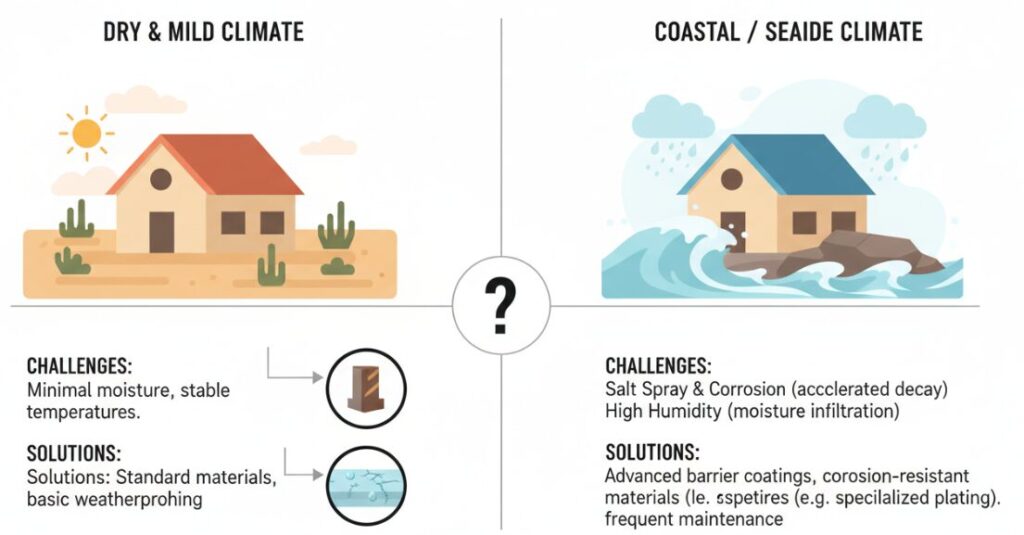
The challenges of building a house in a dry and mild place and building a house by the sea are completely different.
- Salt Spray And Corrosion: Projects near the ocean have to deal with salt spray, which is simply a corrosion accelerator. In these environments, if only standard plating is used, human intervention is often required for less than 50 years.
- High Humidity: Those areas that are wet all year round need a more advanced barrier coating to prevent moisture from getting into the tiny flaws that are invisible to the naked eye on the paint or zinc coating.
The Key Role Of Continuous Maintenance
Finally, the durability of steel buildings is not “factory-built and permanent.” It requires an active maintenance plan to protect the coatings that protect the steel.
- Regular cleaning: Cleaning buildings is not only to look good, but also to remove dirt, debris, and most importantly-corrosive elements such as salt spray or industrial pollutants. If not washed, these particles will erode through the protective layer over time.
- Painting & Sealing: Over a span of 50 to 100 years, the initial finish is sure to fade or powder. Repainting is not only for beauty, but also to update the barrier against natural elements. In addition, checking and sealing the fasteners (screws) ensures that water does not seep into the wall cavity.
Author: Dustin
I am a dedicated steel construction specialist and project consultant with over 16 years of experience in the industrial building sector. My work focuses on helping investors and project managers maximize the lifecycle of their permanent assets. I specialize in analyzing material durability, protective coatings, and maintenance strategies to ensure steel structures withstand diverse environmental challenges for generations.