
 ACIER GAOERJI


Recherche
Quelle est la tolérance admissible pour l'acier de construction ?
Pour les entrepreneurs ou les inspecteurs de qualité qui surveillent actuellement l'avancement du chantier et qui ont un besoin urgent d'un indicateur technique. Dans toutes les tolérances d'installation, la loi fondamentale est le principe du 1/500 : pour une colonne unique, l'écart de verticalité ne peut excéder 1/500 de la hauteur. Toutefois, il existe un principe selon lequel le déplacement total ne doit pas dépasser un pouce à l'intérieur et deux pouces à l'extérieur de la ligne de référence du bâtiment.
Pour donner une réponse professionnelle qui puisse résister à un examen minutieux, la tolérance doit être divisée en trois étapes différentes : la tolérance de laminage, la tolérance de traitement et les tolérances d'installation. Si votre soudure ou votre trou de boulon actuel sur le site ne correspond pas à ces limites cumulatives et les dépasse, il est fort probable que vous ne réussissiez pas l'acceptation et que vous deviez vous préparer à ajouter des joints ou à apporter des modifications structurelles.
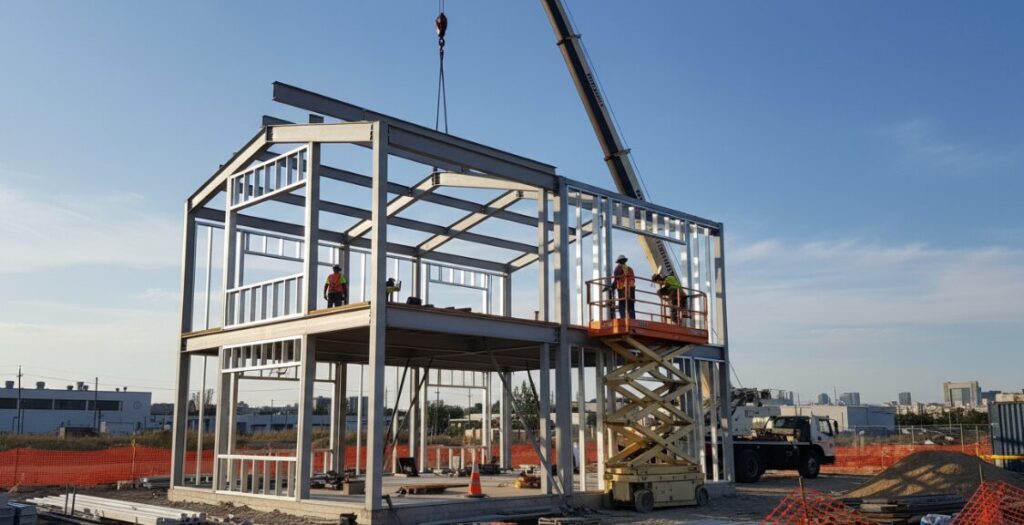
Tolérance de laminage
Avant que l'acier n'entre dans l'usine de transformation, il doit respecter les tolérances de laminage. Il s'agit de la marge d'erreur autorisée pour les matières premières au moment de l'expédition à l'aciérie.
Section et poids : De nombreuses personnes pensent à tort que la taille indiquée dans le manuel n'est pas mauvaise du tout. En fait, l'ASTM A6 autorise des écarts mineurs au niveau de la largeur de la bride, de l'épaisseur de l'âme et du poids par pied. Ces écarts doivent être pris en compte lors de la conception et du contrôle.
Jugement professionnel : Ne sous-estimez pas ces moindres différences. Si les matières premières se situent dans la limite supérieure de la tolérance, il se produira ce que l'on appelle une “accumulation de tolérances” au cours du processus ultérieur de traitement et d'installation, ce qui est souvent la source de tous les maux qui ne peuvent pas être compensés dans la période ultérieure.
Tolérance d'usinage
Lorsque les matières premières sont envoyées à l'usine, elles entrent dans la phase de transformation. Les tolérances d'usinage déterminent si l'acier est coupé, soudé et assemblé avec suffisamment de précision dans l'atelier.
Longueur du membre : La plupart des éléments ont une tolérance de longueur de ± 1/16 à 1/8 de pouce. Si la fin du besoin de composants de transmission de force sous pression, les exigences seront plus anormales, les tolérances plus serrées.
Cambrure et balayage :
- Cambrure : La pré-flexion vers le haut d'une poutre avant qu'elle ne soit chargée. Pour les éléments de moins de 50 pieds, la déviation est généralement de 1/2 pouce/ -0 pouce.
- Balayage : Pliage dans le sens horizontal. Cette pièce doit être collée, sinon, lorsque la poutre sera installée entre les colonnes, il faudra travailler dur pour la casser, voire la brancher.
Atelier à structure métallique
Les ateliers à structure métallique sont polyvalents. La portée libre garantit un espace sans obstacle, tandis que les colonnes centrales et intermédiaires offrent des solutions économiques pour les grandes portées.
Pont/Structure en acier Bridgeipsum
Les ponts à structure en acier utilisent des rapports résistance/poids élevés pour atteindre de longues portées là où les appuis intermédiaires sont difficiles.
Bâtiments à structure métallique
Les bâtiments à structure métallique présentent des conceptions polyvalentes pour répondre à des besoins divers. La portée libre offre un espace ouvert, tandis que les colonnes centrales et intermédiaires augmentent l'économie pour les grandes portées. Le système Multi Gable permet de répondre à des largeurs complexes.
Emplacement du trou de boulon : Si l'écart de position du groupe de trous de boulon dépasse 1/16 de pouce, vous mettrez certainement votre vie en danger lorsque vous l'installerez sur le site.
Tolérance d'installation
Il s'agit généralement de l'élément qui suscite le plus de querelles sur le chantier et qui est le plus surveillé par l'inspecteur de la qualité.
1/500 Principe de verticalité : c'est la pierre angulaire de la stabilité structurelle.
- Calcul : Pour chaque tranche de 20 pieds de hauteur verticale, la colonne est autorisée à s'incliner de 1/4 de pouce.
- Limite absolue : Quelle que soit la hauteur du bâtiment, le déplacement total vers l'intérieur de la ligne de construction ne peut excéder un pouce et vers l'extérieur ne peut excéder deux pouces, afin de ne pas entrer en conflit avec des travaux tels que des panneaux d'accrochage sur les murs extérieurs.
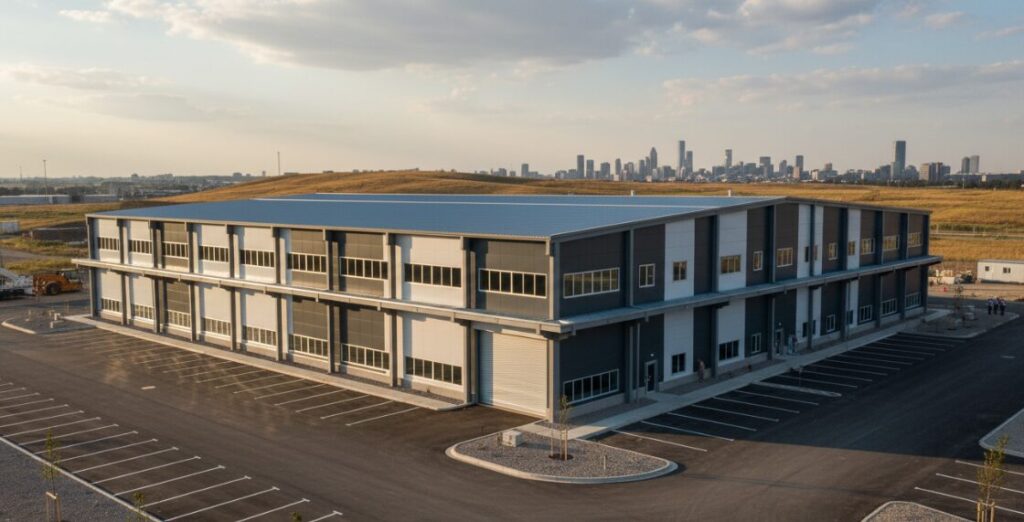
Élévation et alignement : Lorsque j'examinerai la construction, je m'attacherai à vérifier si l'effet cumulé du laminage, de la transformation et de l'installation affecte le chemin de transmission de la force de la structure.
Traitement des problèmes
Effet cumulatif : Souvent, le problème n'est pas dû à une erreur dans un certain maillon, mais à la déviation de chaque maillon dans la même direction, et c'est finalement un grand désordre.
Impact sur les soudures et les boulons : Le résultat d'un alignement inégal est que les trous de boulons ne peuvent pas être percés, ou que l'écart entre les soudures sur place est ridiculement grand. Ne brûlez pas les soudures dures. Vous devez à nouveau remplir le formulaire de contact technique. Il se peut que vous deviez reformuler le processus de soudage ou demander l'approbation d'un ingénieur.
Cales structurelles : Il s'agit d'un moyen conventionnel de traiter les problèmes mineurs d'élévation ou de verticalité. Toutefois, si l'écart est trop important, il peut s'agir d'un retraitement ou d'un renforcement structurel, qui ne peut être résolu par l'ajout de quelques joints.
Auteur : David Miller
Ayant supervisé des dizaines de projets industriels de grande envergure, je m'attache à aider les entrepreneurs et les inspecteurs à comprendre les nuances critiques des tolérances de l'acier afin de garantir la sécurité structurelle et la conformité du projet.
Le précédent : Pourquoi l'acier est-il utilisé pour les ponts ?Le suivant : Isolation des bâtiments métalliques : Type de matériau et coût