 GAOERJI STEEL


Search
Do Steel Buildings Need A Foundation
The simple answer is: it has to be. For any permanent steel structure building, a decent foundation is mandatory, not only to ensure that the structure does not collapse and the steel does not rust, but also to pass the local building acceptance.
Although technically speaking, the kind of small, temporary mobile shed can be fixed on the bare ground with ground anchors, but if you want to build a permanent steel structure, do not put it directly on the mud, gravel or asphalt. Without the foundation, your house will easily encounter problems such as “wind load overturning” (being blown away by the wind), uneven settlement (sinking into mud) and frame deformation, which will directly lead to the manufacturer’s refusal of insurance.
However, this does not mean that you have to spend a lot of money to pour entire expensive concrete slab (full house). Cost-effective solutions such as pier Foundations or strip foundation can often provide the same stability at a small cost the floating raft foundation.
Why Can’t Permanent Steel Structures Sit Directly On Mud, Gravel Or Asphalt?
Standing a permanent building directly on untreated ground or soft surface is definitely a low-level mistake. Many customers feel that this can save money, but the physical properties of these surfaces simply cannot meet the long-term support needs of steel structures.
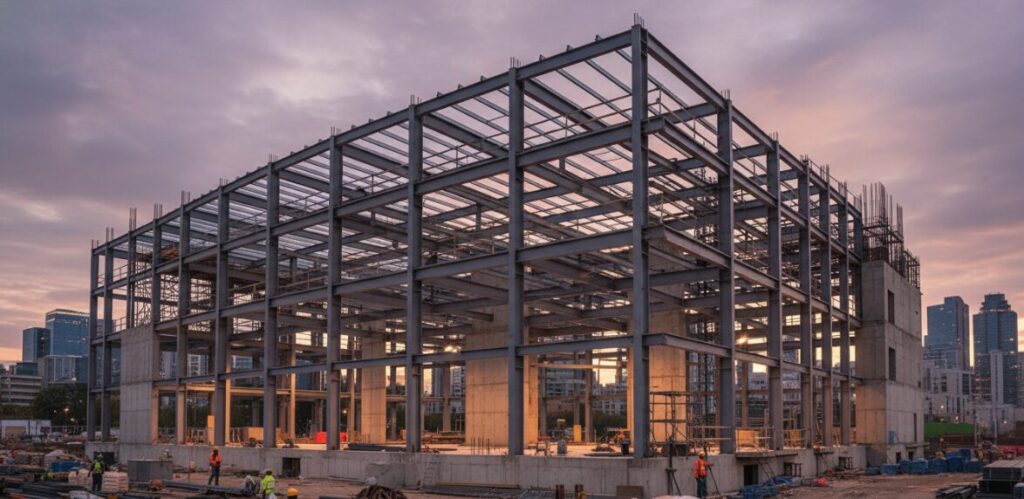
- Dirt and Soil: Soil is organic and its state changes with its water content. Put the steel directly against the soil, which means that it will be exposed to moisture for a long time, which will accelerate corrosion and directly reduce life.
- Gravel: The gravel layer does provide good drainage, but its tensile strength is almost zero. When the wind comes, it can’t hold the anchor at all. And this thing will shift after heavy, causing your building chassis to be uneven.
- Asphalt: Many people think that asphalt is hard, in fact, it is more like a kind of very thick fluid. The weather is hot and soft, and the weather is cold and cracking. It simply can’t hold the anchors that are used to resist wind loads.
- That is, the risk you will face by saving a foundation money.
Skip the foundation step and your investment will face the 3 fatal threat clearly defined in the engineering standards:
Wind Uplift
A notable feature of steel structure is that its weight is relatively light, but its surface area is large. If not bolted to the heavy, fully cured concrete foundation, the house would look like a kite on a windy day. The so-called “wind load overturning” is when the wind pressure drills under the building or rips the roof, pulling the house directly from the ground. The ground anchors used for temporary sheds are not enough to see in the face of the pull-up force on the permanent steel structure.
Uneven Settlement And Frame Deformation
If the house is located on bare ground, the degree of compression of the soil below is not the same. This corner may sink a little deeper, and that corner is still in place-this is called “differential settlement”. This displacement distorts the rigid steel frame.
The consequence is that the door cannot be closed, the window is cracked, and the originally flat metal plate begins to bulge and deform.
Void Manufacturer’s Warranty
Almost all the regular steel structure manufacturers have this clause in their warranty: there must be a concrete foundation. If the column rusts or the frame is deformed because you install it on mud or asphalt, the manufacturer will never compensate, and the warranty will be canceled directly.
The Only Exception: Temporary Mobile Sheds
There is only 1 specific case, and I will not mandate concrete pouring. As mentioned earlier, small, temporary mobile sheds can sometimes be installed on bare ground.
- Method: These structures rely on ground anchors (anchors that drill into the earth like a drill bit) rather than concrete bolts.
- Limitations: This is limited to the Temporary setting. If you plan to use this shed for a long time, even if it is small, I also recommend a concrete cushion to prevent decay and displacement.
Steel Structure Workshop
Steel Structure Workshops offer versatile designs. Clear Span ensures unobstructed space, while Centre and Intermediate Columns provide economical solutions for wide spans.
Bridge/Steel Structure Bridgeipsum
Steel Structure Bridges utilize high strength-to-weight ratios to achieve long spans where intermediate supports are difficult.Their versatility makes them essential for critical infrastructure connectivity.
Steel Structure Buildings
Steel Structure Buildings feature versatile designs to meet diverse needs. Clear Span offers open space, while Centre and Intermediate Columns increase economy for large spans. Multi Gable accommodates complex widths.
A Cheaper Alternative Than An All-Concrete Base Slab
Many buyers hear “foundation” and think about expensive raft foundations (Floating Slab, that is, concrete pouring covering the entire ground). That’s a good thing, but it’s not the only option. You can achieve robustness and compliance in a more affordable way:
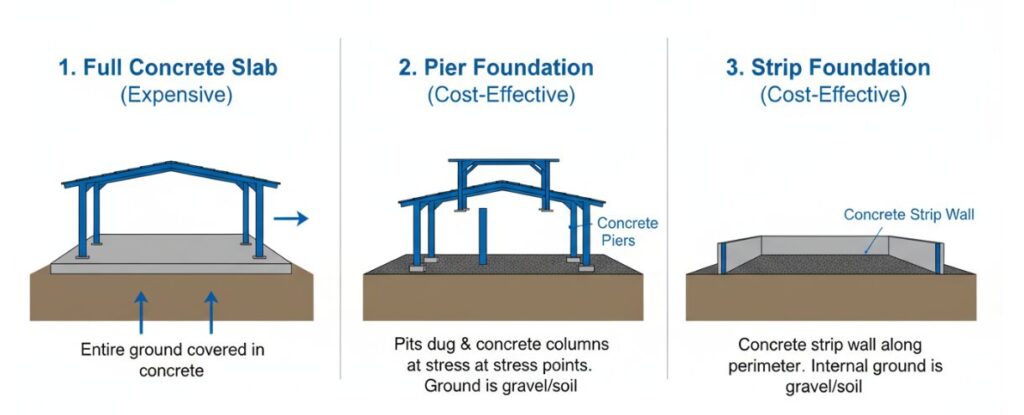
- Pier foundation: We only dig pits and pour concrete columns at specific stress points where steel structure columns fall. This provides excellent pull-out resistance and eliminates the significant cost of pouring concrete over large areas.
- Strip foundations: A concrete strip wall is cast along the outer perimeter of the building to support the wall. If you are an agricultural machinery warehouse, the internal ground can completely retain gravel or compacted soil, which not only greatly reduces the cost of concrete, but also prevents structural settlement and overturning by wind.
Frequently Asked Questions (FAQ)
No, never build a permanent steel structure on asphalt. Asphalt is too soft, especially when the weather is hot, it cannot pull the anchor bolt. It cannot provide the structural strength required to prevent wind lifting or settling.
It’s not. Although the raft foundation (full board) is a common choice, it is also often the most expensive. Cost-effective alternatives such as pier foundations or strip foundations can provide the necessary structural support and meet building codes without spending so much money on watering the land.
No foundation will lead to uneven settlement (building subsidence to varying degrees), which will distort the frame. In addition, this will allow the steel to directly contact the ground moisture and cause rust, making the house easy to be blown down by high winds. Most importantly, this will void your manufacturer’s warranty directly.
Ground anchors are only suitable for small, temporary mobile sheds. For permanent steel structures, they are unqualified. What you need is the weight and stability of concrete to resist wind load and ground displacement.
Author: Mark Stevenson
“I’m a Structural Consultant with 12 years of experience in the pre-engineered metal building industry. I specialize in site preparation and foundation design, helping clients navigate building codes to ensure their steel structures are safe, durable, and warranty-compliant.”