 GAOERJI STEEL


Search
Difference Between Pre-Engineering Building And Ordinary Steel Structure
Direct to the conclusion: the core difference between the two is not the material itself, but the engineering efficiency, cost control and delivery speed. PEB is the overall, factory-based customized solution. Through variable cross-section (Tapered Columns) and component optimization, PEB can reduce the steel consumption by about 30% compared with ordinary steel structures. This optimization directly means that the investment cost can be saved by 20% to 30%, and the construction period can be reduced by half.
Design Logic And Engineering Philosophy
The distinction is drawn from the drawing stage.
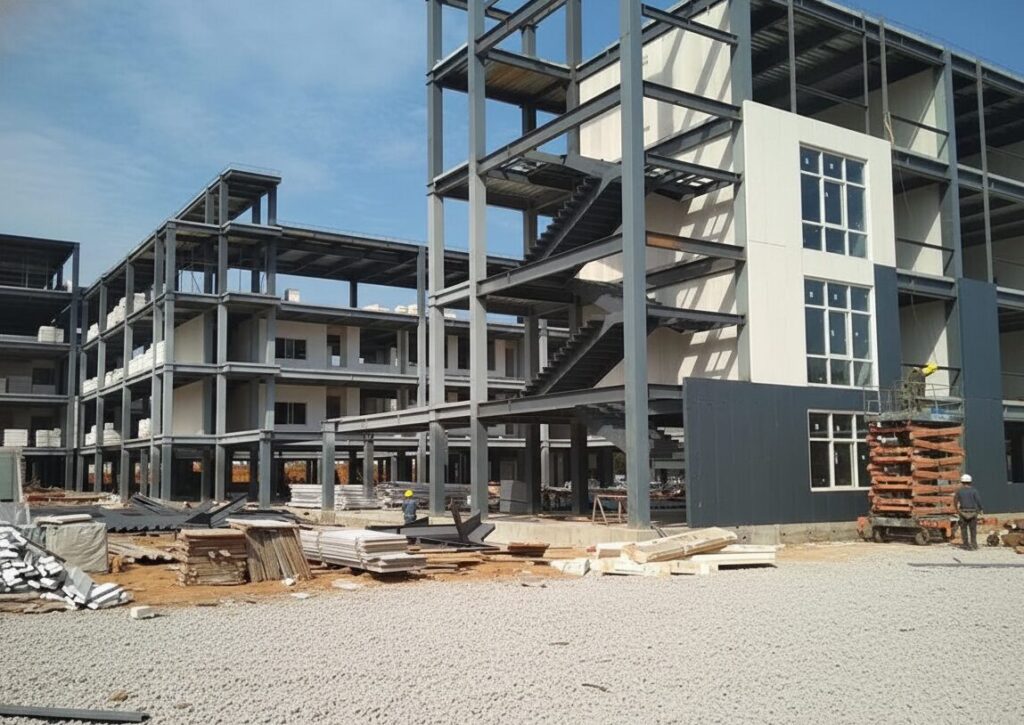
PEB: This type of system uses special software for mechanical calculations, and designs the cross-section according to the actual force on each point of the frame. In other words, the columns and beams are “variable cross-section”-the place where the force is large is wide, and the place where the force is small is narrow. This “tailor-made” approach ensures that every grams of steel is used on the cutting edge and never wasted.
Ordinary Steel Structure: The traditional practice relies on standard hot-rolled steel sections (such as H-beams, I-beams or channels), whose cross-sections are the same from beginning to end. This is actually “over-design” in many positions with less stress, which increases the weight and cost of the project for no reason.
Structural Self-weight And Foundation Requirements
The lightweighting of the PEB design has a knock-on effect on the entire project budget.
- Weight reduction: Due to the use of optimized variable cross-section components, PEB structures are usually 25% to 30% lighter than ordinary steel structures.
- Foundation impact: the upper structure is light, the foundation bearing pressure is small. This means that the anchor bolts and caps can be made smaller, and the amount of concrete and steel will be greatly reduced. In many sites with ordinary geological conditions, this part of the money saved is very considerable.
Steel Structure Workshop
Steel Structure Workshops offer versatile designs. Clear Span ensures unobstructed space, while Centre and Intermediate Columns provide economical solutions for wide spans.
Bridge/Steel Structure Bridgeipsum
Steel Structure Bridges utilize high strength-to-weight ratios to achieve long spans where intermediate supports are difficult.Their versatility makes them essential for critical infrastructure connectivity.
Steel Structure Buildings
Steel Structure Buildings feature versatile designs to meet diverse needs. Clear Span offers open space, while Centre and Intermediate Columns increase economy for large spans. Multi Gable accommodates complex widths.
Manufacturing And Quality Control
Where the steel is disposed of determines the life of your asset.
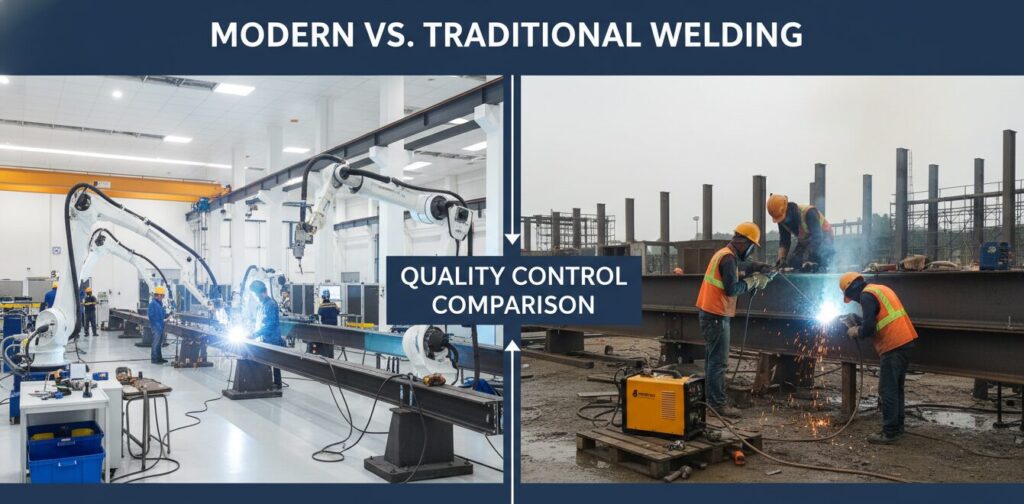
PEB (Factory Controlled): All components-from the main frame to the secondary purlins-are cut, punched and welded in the factory. In this controlled environment, the welding accuracy and the effect of anti-corrosion coating (painting or galvanizing) are difficult to compare on the construction site.
Ordinary Steel Structure (Site-Intensive): Although some components are also prefabricated in the workshop, ordinary steel structures often require a lot of cutting and welding on site. Field operations are too affected by the weather, and the level of welders is uneven, which is easy to leave quality hazards.
Construction Speed And Labor Efficiency
In industrial real estate, time is real money.
The advantage of PEB: All parts are ready like “Lego bricks” when they arrive at the construction site. Because it is all bolted, there is no need for large-scale field welding, and the installation speed is usually 40% to 50% faster than traditional methods. This not only reduces the need for highly paid skilled workers, but also saves the onsite management hassle.
The challenge of Ordinary Steel Structures: The traditional approach involves more on-site hot work and manual alignment. This not only lengthens the construction period, but also increases the management expenses and the risk of site safety accidents.
Economy And Return On Investment
The financial metrics are the ultimate deciding factor.
| Feature | Pre-Engineered Building (PEB) | Ordinary Steel Structure |
| Total Cost | 20% – 30% Savings | Higher Initial Investment |
| Construction Time | Rapid (Weeks) | Traditional (Months) |
| Steel Weight | Optimized (Lightweight) | Heavy (Standard Sections) |
| Maintenance | Low & Predictable | Variable |
| Best Used For | Warehouses, Factories, Sheds | High-Rise, Complex Curved Designs |
How Do You Choose?
Which structure to choose ultimately depends on your project goals.
If you are looking for high ROI (return on investment), rapid production and cost-effectiveness of industrial facilities, then PEB is the undoubted winner. It not only reduces material waste, but also allows you to enter operation half a year earlier than your competitors.
Of course, if your project is to do the kind of non-linear buildings that are extremely artistic and distorted, or need to use super-heavy cranes in extreme environments where PEBs cannot be equipped as standard, then ordinary steel structures are still a viable (although more expensive) option.
Author: David Chen
“Hi, I’m an industrial project consultant and structural specialist with years of hands-on experience in steel construction. My expertise lies in optimizing engineering efficiency and helping investors maximize their ROI through smart structural choices. I am passionate about bridging the gap between complex engineering logic and real-world business profitability, ensuring that every gram of steel contributes to my clients’ success.”