 GAOERJI STEEL


Search
Can You Turn A Steel Building Into A Residential Home
Yes, you absolutely can turn a steel building into a residential home, a practice now widely recognized as the popular “Barndominium” trend. However, creating a viable living space requires more than just erecting a metal shell; you must satisfy critical zoning laws and install high-performance insulation to prevent the structure from “sweating.” While the exterior shell may cost significantly less than traditional wood framing, the interior build-out requires standard residential planning. To successfully convert a steel building into a home, consider these key factors:
- Zoning & Permits: Verify local regulations first. Many HOAs restrict metal exteriors, and you will need specific residential permits, not just agricultural ones.
- Insulation & Thermal Breaks: Unlike wood, steel conducts heat. You must use closed-cell spray foam or a thermal break system to control temperature fluctuations and condensation.
- Foundation Engineering: Ensure your foundation is engineered for a residential slab, incorporating necessary plumbing trenching before the concrete is poured.
- Interior Framing: You will need to build independent interior stud walls (wood or light-gauge steel) to run electrical wiring, HVAC ducts, and hang drywall.
- Cost Reality: Costs vary widely (e.g., total cost of
50−50−145 per square foot), depending on renovations and labor, but remodeling a house can be faster and more affordable than building one.
This video shows a real-life example of converting a metal building into a home:
Navigating Zoning Laws And Permits
Before you look at any set of material packages or prepare to move the ground, the most critical step is always to settle the legal issues. Technically, it’s easy to turn a steel structure into a home, but local municipalities often have very rigid rules about where such “iron houses” can be built.
Residential Vs. Agricultural Permits:
This is the easiest pit for novices to step on-the mistaken impression that a farm permit (usually used for barns or storage sheds) can be used to live in. To live legally, you must apply for a residential building permit. This means that you must meet a series of strict safety regulations regarding escape windows (egress windows), fire safety and sewage sanitation.
Restrictions Of HOA:
If you are building in a subdivision or community managed by an owner association (HOA), be sure to look through their conventions carefully. In order to maintain the unity of the community appearance, many HOAs have clear aesthetic standards and directly prohibit metal siding or buildings with industrial appearance. Don’t wait until the house is halfway built to get a stop-work order.
Insulation And Broken Bridges
The biggest technical challenge in converting steel structures into homes is managing the thermal properties of the metal.
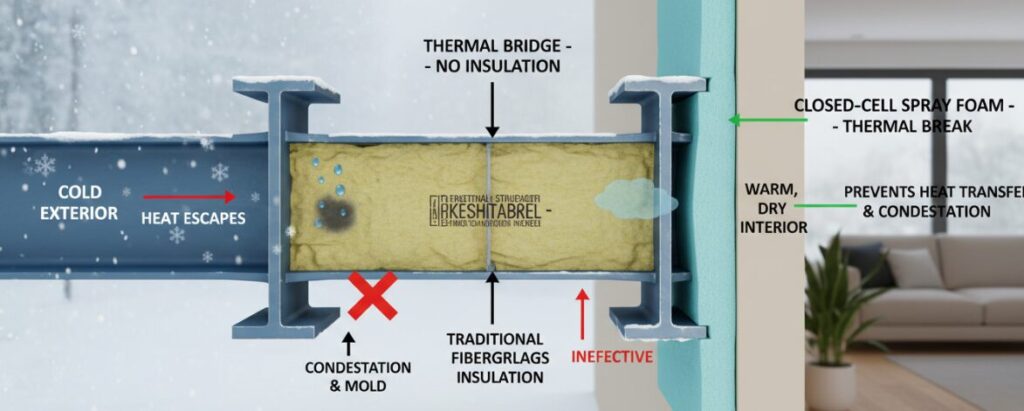
Steel is extremely efficient in conducting heat and cold, which can lead to a severe “thermal bridge effect”. If you do not intervene, the temperature difference between the outside air and the internal air-conditioned environment will quickly condense water droplets inside the steel plate. The jargon calls architecture “sweating”, which is actually condensation.
In order to prevent moisture damage and mold growth, traditional fiberglass wool is almost useless here. In my experience, closed-cell spray foam is the industry standard for this type of transformation. It is not only a high-performance insulation material, but also a perfect moisture-proof layer, which can form the necessary “thermal break bridge” and keep the indoor dry and constant temperature.
Foundation Engineering And Pipeline Embedding
The foundations of steel structures for homes are completely different from those of barns on dirt floors or simple garage foundations.
At the planning stage, the foundations must be engineered specifically for the loads and utilities of the dwelling. Because the ground is a concrete slab, all rough-in plumbing must be planned and trenching before concrete is poured. Once the concrete is set, the cost of changing the position of the toilet, sink or shower is too high.
In addition, a qualified residential engineering board also needs to support the weight of the steel column while providing an absolutely level surface for your internal flooring material.
Steel Structure Workshop
Steel Structure Workshops offer versatile designs. Clear Span ensures unobstructed space, while Centre and Intermediate Columns provide economical solutions for wide spans.
Bridge/Steel Structure Bridgeipsum
Steel Structure Bridges utilize high strength-to-weight ratios to achieve long spans where intermediate supports are difficult.Their versatility makes them essential for critical infrastructure connectivity.
Steel Structure Buildings
Steel Structure Buildings feature versatile designs to meet diverse needs. Clear Span offers open space, while Centre and Intermediate Columns increase economy for large spans. Multi Gable accommodates complex widths.
Internal Frame And Utilities
When you turn steel into a home, that metal shell is at best a layer of weatherproof “skin”. The internal structure actually uses the logic of “house within a house” (house within a house).
If you want to go with wires, heating and ventilation ducts (HVAC) and water pipes, you can’t simply attach them to the external metal plate. You have to build independent internal keel walls. Usually we will use the traditional wood square or light steel keel. These frame walls not only provide the cavity for the pipeline, but also the structural foundation for you to hang gypsum boards, cabinets and skirting lines, so that after the decoration, there will be the texture of a traditional house.
Understanding The Cost Truth
This video discusses the potential costs involved in converting a metal building:
Many people are tempted to “Barndominium”, mainly to save money, but I have to give you a clear understanding of the budget.
Yes, building a steel shell is really cheaper than building a house with wood and bricks. However, the cost of interior decoration is exactly the same as that of a traditional house. Cabinets, flooring, countertops, appliances and plumbing fixtures, which you still have to buy at market prices.
Although total project estimates are usually between $50 and $145 per square foot, please note that the low end of this price range usually means owner-in-person (DIY) or just the most basic decoration. This kind of building saves money on the speed of starting the shell, but if you want to turn that shell into a comfortable high-end residence, the budget logic is no different from that of ordinary building.
Author: Alex Morgan
“Hi, I’m construction consultant specializing in alternative housing solutions. With over 10 years of experience in structural engineering and residential planning, I help homeowners navigate the complexities of converting industrial steel shells into functional, code-compliant Barndominiums. “