
 GAOERJI STEEL


Search
Are Steel Buildings Cost Effective
My answer is very direct: of course it’s a good deal. Especially for B2B commercial use, if the “total cost of ownership” (TCO) as a measure of return on investment (ROI) of the core indicators, steel structure is almost a rolling choice. After reviewing numerous project budgets, I found a rule: although the initial material cost of prefabricated metal buildings (PEMB) is usually similar to that of traditional wood or masonry structures, the real economic value is not reflected in the unit price of the pile of steel, but in the extremely low maintenance cost, insurance rate and super durability throughout the life cycle of the building. Not to mention that due to the short construction period of the steel structure, the enterprise can be put into use earlier and the cash flow is returned faster. Rather than staring at that little bit of initial construction budget, commercial and industrial investors who are looking at long-term asset performance are really smart about choosing steel structures.
Understanding The “TCO Paradigm” In Commercial Buildings
Many developers have a problem and wish to directly choose the scheme with the lowest quotation. But for an asset like a warehouse, a distribution center or a manufacturing plant, the real costs are coming out over the next 20 to 50 years. The steel structure is to offload the financial pressure from the operational stage. Since steel itself is the high-performance material, while the upfront capital expenditure (CapEx) may not seem so “cheap”, it is hedged by a significant reduction in operating expenditure (OpEx), which ultimately leads to a higher net asset value over the life of the building.
Steel Structure Workshop
Steel Structure Workshops offer versatile designs. Clear Span ensures unobstructed space, while Centre and Intermediate Columns provide economical solutions for wide spans.
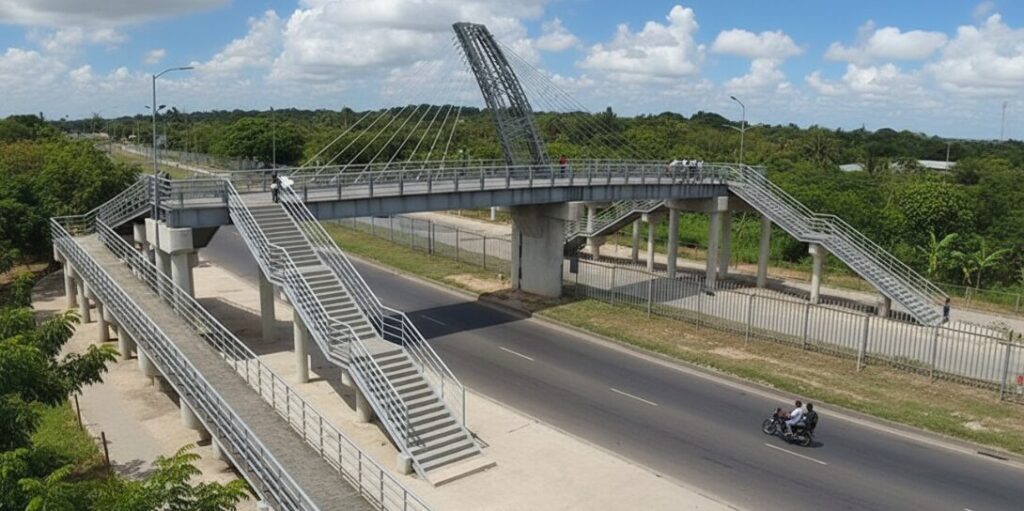
Bridge/Steel Structure Bridgeipsum
Steel Structure Bridges utilize high strength-to-weight ratios to achieve long spans where intermediate supports are difficult.Their versatility makes them essential for critical infrastructure connectivity.
Steel Structure Buildings
Steel Structure Buildings feature versatile designs to meet diverse needs. Clear Span offers open space, while Centre and Intermediate Columns increase economy for large spans. Multi Gable accommodates complex widths.
Durability
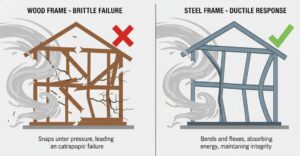
The most economic driving force of steel structure is its durability. I’ve seen too many wooden structures that have to be overhauled because of rot, termites, mold, or deformation. In contrast, the structural integrity of prefabricated metal buildings (PEMB) decades. In the face of heavy snow loads, strong winds and earthquakes, the toughness of steel means that you need to pay very little for structural repairs. Wood or masonry will settle and sag, but steel will not. This means that the building does not need to be strengthened at intervals of , as in traditional old facilities.
Keeping Operating Costs Low
For asset owners, maintenance is often an invisible “profit killer”. Minimal maintenance was considered at the beginning of the design of the steel structure. For traditional masonry or wood structures, you need to frequently check the exterior walls, roofs, and foundation settlements. Modern steel buildings usually use high-quality anti-rust long-lasting coatings. Since the steel will not be due to changes in humidity and thermal expansion and contraction, internal and external decoration is not easy to crack, which directly saves a large amount of “repair” budget.
Insurance Premiums
Many people don’t realize that insurance costs are actually a major hidden advantage of steel structures. Insurance companies are shrewd, and their assessment of risk is directly linked to the fire resistance rating and structural toughness of the material. Steel is a non-combustible material, even if a fire occurs, it will not support combustion. This characteristic directly leads to a decline in premiums for commercial owners. The performance of these buildings in resisting natural disasters also greatly reduces the risk of catastrophe claims. The premiums saved over the years are enough to take this of investment to a higher level.
Construction Speed And Operational ROI
The construction speed of prefabricated steel structure is much faster than that of traditional masonry or concrete pouring. All components are prefabricated according to specifications off-site, and the on-site assembly is extremely efficient. The factory can be delivered several months in advance, which means that your production line and leasing business can be started in advance. This early cash flow from operations often directly covers that portion of the initial financing cost.
Energy Efficiency
Energy costs for industrial and commercial buildings have always been the largest. Modern steel systems are designed with advanced insulation and thermal efficiency considerations built in. Today’s PEMB designs often incorporate a high R-value insulation system and a specially designed reflective roof coating that greatly reduces the burden on air conditioning (HVAC) systems. When you add up 10, 20 or even 30 years of electricity bills, the energy-saving advantages of steel structure are enough to dwarf old and inefficient traditional buildings.
Conclusion
So, is steel construction cost-effective? Data and practice give a clear “yes”. Steel is the kind of responsible financial choice for any investor who prioritises the long-term performance of an asset. By reducing the risk of maintenance, insurance and energy consumption, and maximizing the speed of production, this form of construction itself a rational financial decision. In this industry, investors who can leap from “pursuing low-price bidding” to “pursuing TCO orientation” are the real experts.
Name: Marcus Reed
“Hi, With years of experience in reviewing complex project budgets and managing commercial developments, I’ve dedicated my career to helping B2B investors maximize their asset performance. I specialize in analyzing the ‘Total Cost of Ownership’ (TCO) for industrial facilities, moving beyond initial bidding prices to uncover long-term financial value. My expertise lies in prefabricated metal buildings (PEMB) and structural efficiency.”
The prev: How To Build A Steel BridgeThe next: How To Size Steel I-Beams For A Bridge
Related recommendations
-

How To Erect Structural Steel
21Master Professional PEB Steel Structure Installation With Our 5-Step Guide For Maximum Safety And Precision.
View details -
What Is The Main Advantage Of Structural Steel
186Discover Why Structural Steel’S Strength-To-Weight Ratio And Ductility Are Key To Engineering Efficiency And Safety.
View details -
Can Steel Buildings Withstand Hurricanes
233Yes, Steel Buildings Withstand 170+ Mph Winds. See How Ductility And Continuous Load Paths Ensure Structural Survival.
View details -
How Structural Steel Is Made
22Explore The 5 Stages Of Structural Steel Production, From Raw Materials To Hot Rolling, In This Professional Guide.
View details

HelloPlease log in