 GAOERJI STEEL


Search
What Is The Allowable Tolerance For Structural Steel
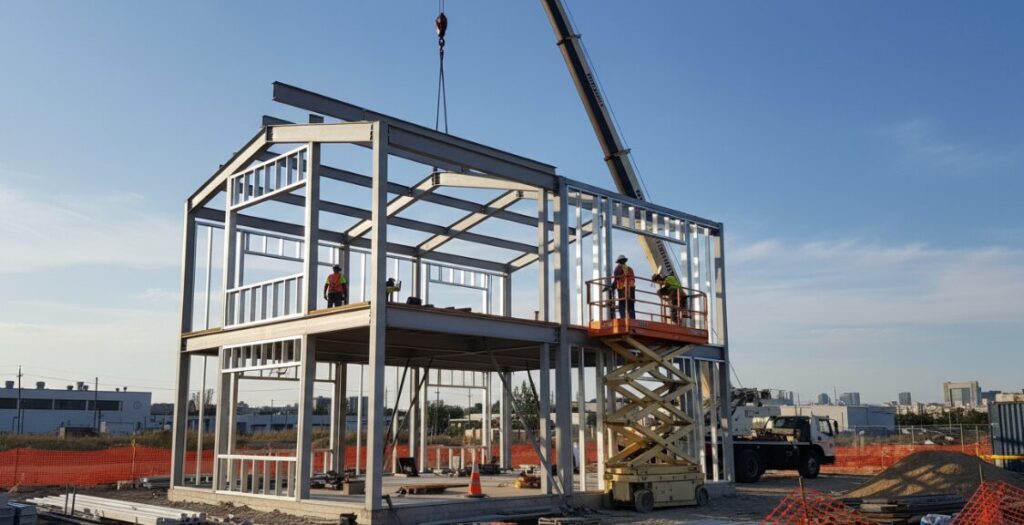
For contractors or quality inspectors who are now watching the progress on the construction site and are in urgent need of a technical indicator. In all installation tolerances, the core law is the 1/500 principle: for a single column, the verticality deviation cannot exceed 1/500 of the height. However, there is a premise that the total displacement should not exceed one inch on the inside and two inches on the outside of the building reference line.
To give a professional answer that can withstand scrutiny, the tolerance must be cut into 3 different stages: rolling tolerance, processing tolerance, and installation tolerances. If your current on-site weld or bolt hole does not match and exceeds these cumulative limits, there is a high probability that you will not pass the acceptance, and you have to prepare to add gaskets or make structural modifications.
Rolling Tolerance
Before the steel enters the processing plant, it has to meet the rolling tolerances. This is the allowable error range for raw materials when the steel plant ships.
Section and weight: Many people have a misunderstanding that the size written in the manual is not bad at all. In fact, ASTM A6 allows minor deviations in flange width, web thickness, and weight per foot. These deviations must be taken into account when designing and checking.
Professional judgment: Don’t underestimate these slightest differences. If the raw materials are within the upper limit of the tolerance, then the so-called “tolerance accumulation” will occur in the later processing and installation process, which is often the source of all evils that cannot be matched in the later period.
Machining Tolerance
When the raw materials are sent to the factory, they enter the processing stage. Machining tolerances determine whether the steel is cut, welded and assembled accurately enough in the workshop.
Member Length: Most members have a length tolerance of ± 1/16 to 1/8 inch. If the end of the need for pressure-bearing force-transmitting components, the requirements will be more abnormal, tighter tolerances.
Camber and Sweep:
- Camber: The upward pre-bending of a beam before it is loaded. For members under 50 feet, the deviation is usually 1/2 inch/ -0 inch.
- Sweep: Bending in the horizontal direction. This piece must be stuck, otherwise when the beam is installed between the columns, you will have to work hard to break it off, or even plug it in at all.
Steel Structure Workshop
Steel Structure Workshops offer versatile designs. Clear Span ensures unobstructed space, while Centre and Intermediate Columns provide economical solutions for wide spans.
Bridge/Steel Structure Bridgeipsum
Steel Structure Bridges utilize high strength-to-weight ratios to achieve long spans where intermediate supports are difficult.Their versatility makes them essential for critical infrastructure connectivity.
Steel Structure Buildings
Steel Structure Buildings feature versatile designs to meet diverse needs. Clear Span offers open space, while Centre and Intermediate Columns increase economy for large spans. Multi Gable accommodates complex widths.
Bolt hole location: If the position deviation of the bolt hole group exceeds 1/16 inch, you will definitely doubt your life when you install it on site.
Installation Tolerance
This is usually the most quarrelling on the construction site and the most closely watched part of the quality inspector.
1/500 Verticality Principle: This is the cornerstone of structural stability.
- Calculation: For every 20 feet of vertical height, the column is allowed to lean 1/4 inch.
- Absolute limit: No matter how high the building is, the total displacement to the inside of the building line cannot exceed one inch and to the outside cannot exceed two inches, so as not to conflict with work such as exterior wall hanging boards.
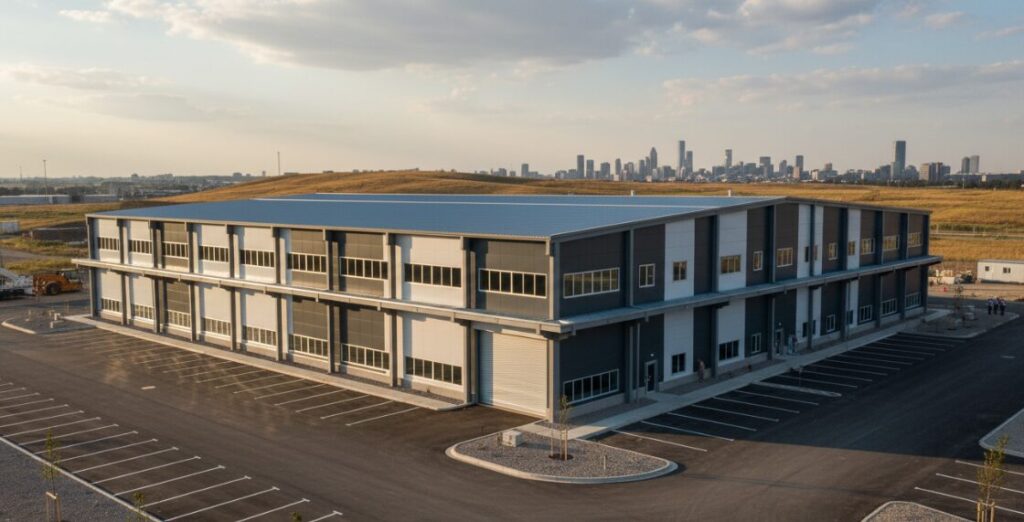
Elevation and Alignment: When I review the construction, I will focus on checking whether the cumulative effect of rolling, processing and installation affects the force transmission path of the structure.
Problem Handling
Cumulative effect: The problem is often not due to a mistake in a certain link, but the deviation of each link is just “hard” in the same direction, and finally there is a big mess.
Impact on welds and bolts: The result of uneven alignment is that the bolt holes cannot be punched in, or the gap between the on-site welds is ridiculously large. Do not burn hard welding. You have to go through the technical contact form again. You may need to re-formulate the welding process or find an engineer for approval.
Structural shims : This is a conventional means of dealing with minor elevation or verticality issues. However, if the deviation is too outrageous, it may involve reprocessing or structural reinforcement, which cannot be solved by adding a few gaskets.
Author: David Miller
Having overseen dozens of large-scale industrial projects, my focus is on helping contractors and inspectors navigate the critical nuances of steel tolerances to ensure structural safety and project compliance.
The prev: Why Is Steel Used For Bridges
Related recommendations
-

Are Steel Structures Eco-Friendly
35Discover How Steel Structures Reduce Waste, Improve ROI, And Meet ESG Goals Through Sustainable Green Steel.
View details -
How Long Does Structural Steel Last
44Learn How Environmental Factors And Protective Coatings Impact Structural Steel’S 100-Year Theoretical Lifespan.
View details -
How To Add Onto A Steel Building
183Expanding? Choose Between Endwall Extensions Or Lean-To Additions. Learn Why Separate Foundations Are Vital For Safety.
View details -
canopy steel structure
15Durable Gaoerji Canopy Steel Structure. Modular Design, Factory Prices & Fast Install. Ideal For Commercial Projects.
View details

HelloPlease log in