 GAOERJI STEEL


Search
What Is A Moment Connection In Structural Steel
Moment Connection is also known as rigid connection. It is not only a node structure, but also a foundation that determines the stability of the entire building skeleton.
Rigid connection is the highly precise design of the connection. Its main task is to transfer bending moments, shear forces, and sometimes axial loads between beams and columns. It is special in that it can tightly limit the relative rotation between the connectors. Unlike the simple shear connection that only cares about vertical loads, the rigid connection can ensure that the angle between the beam and the column remains basically unchanged when loaded. This characteristic is essential to improve the lateral stability and rigidity of the entire building.
In order to achieve this “rigid” behavior, we must firmly anchor the flange of the beam—that is, the place where the bending stress is most concentrated—to the column by full penetration welding or high-strength bolting. The web of the beam is mainly responsible for the shear force. According to the standard of AISC, this kind of node is the soul of “Moment Resisting Frames”, which can effectively resist the lateral force caused by wind load and earthquake. What excites the architect most is that with the use of a new connection, the cross diagonal braces that get in the way can often be omitted, making the interior space more open.
How Does It Work?
To thoroughly understand the new connection, one must focus on how the force passes through this node. In a standard steel frame, the beam-column junction is the “fire line” where the stress is most concentrated.
At the beginning of the design, our engineering focus was almost entirely on the flange of the beam. Because the bending moment causes one side of the flange to be pulled and the other side to be compressed, the flange must be “integrated” with the column. I usually use the following two tricks:
- Full Penetration groove welding: This creates a near-perfect metallurgical bond, allowing beams and columns to grow as if they were together.
- End-plate connection: the use of thick steel plates and high-strength bolts generated by the huge “clamping force”, the beam head hard pressure on the column face.
By locking the flange, the node resists the momentum of the beam relative to the column, thus creating a continuous and integral structural effect.
Steel Structure Workshop
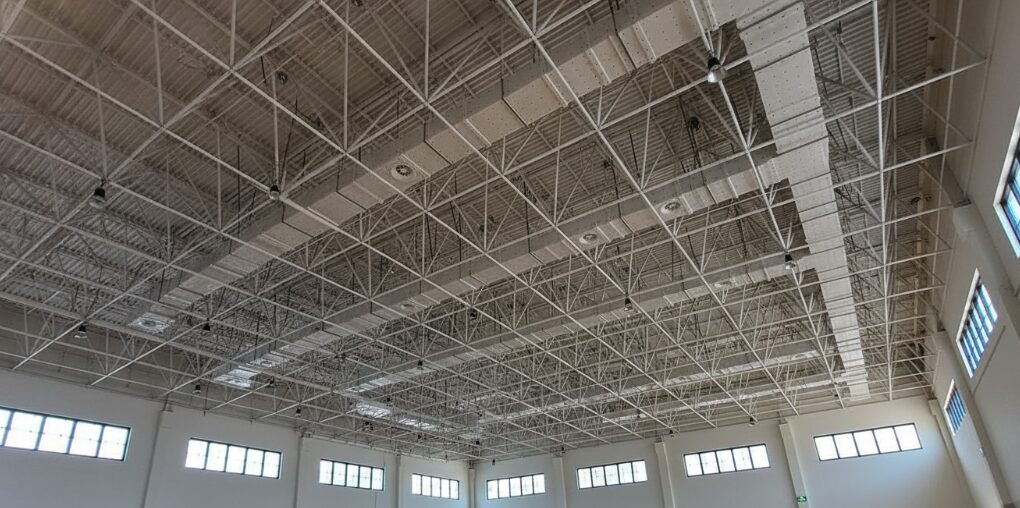
Steel Structure Workshops offer versatile designs. Clear Span ensures unobstructed space, while Centre and Intermediate Columns provide economical solutions for wide spans.
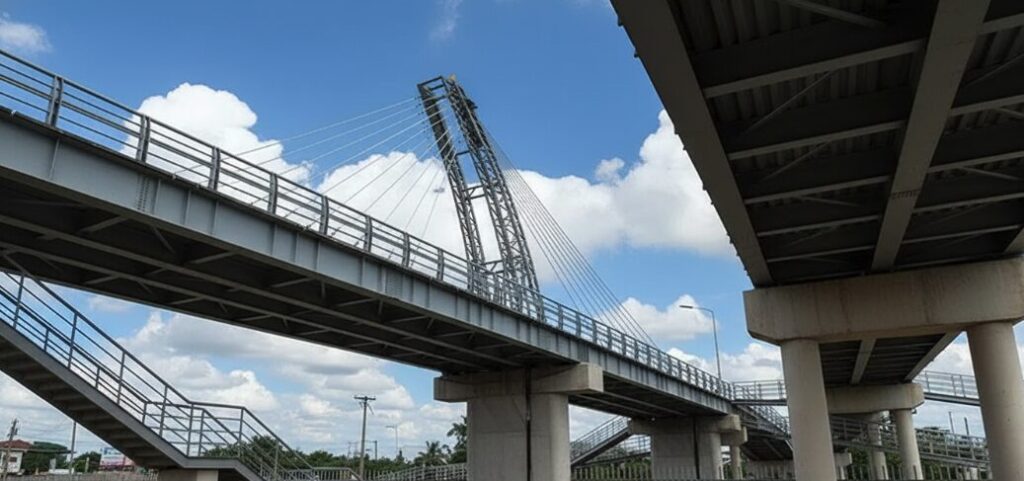
Bridge/Steel Structure Bridgeipsum
Steel Structure Bridges utilize high strength-to-weight ratios to achieve long spans where intermediate supports are difficult.Their versatility makes them essential for critical infrastructure connectivity.
Steel Structure Buildings
Steel Structure Buildings feature versatile designs to meet diverse needs. Clear Span offers open space, while Centre and Intermediate Columns increase economy for large spans. Multi Gable accommodates complex widths.
Key Differences
It is critical to understand the difference between the two in pre-project planning and cost estimation. If you choose the wrong node, the budget and construction period will deviate.
| Characteristic | Shear Connection | Moment Connection |
| Load transfer | is limited to vertical shear load | bending moment shear axial force |
| Rotation ability | allows small rotation | to limit all relative rotation |
| Connection location | usually only connects the beam web | to the beam web and the flange |
| Structural roles | support gravity loads | to provide lateral stability and frame stiffness |
| Cost/complexity | Low cost, fast installation | and high precision requirements, professional labor required |
Why Can’t Modern Architecture Be Separated From Just-Connected Nodes?
For WedoSpace customers, the choice of just pick up is often not purely structural needs, more for architectural aesthetic considerations.
- Elimination of Diagonal Bracing: Traditional steel frames rely on X-braces or shear walls to resist wind. However, with the new connection, the framework itself can “strengthen itself” and resist lateral force. This means you can come up with the kind of large span column-free space, full floor glass curtain wall, or extremely flexible interior layout.
- Seismic and wind toughness: In accordance with AISC specifications, flexural frames are designed to dissipate energy through node deformation in the event of an earthquake. In the high intensity area, the reliability of the rigid connection is the key to ensure that the building “does not fall under the big earthquake.
- Strengthening frame stiffness: In high-rise or long-span buildings, controlling “side shift” is a top priority. The rigidity provided by the rigid connection can control the swing of the structure within a safe and comfortable range for the human body.
Standard Classification
In the professional steel structure design, we will further subdivide according to the constraint degree of the node:
- FR (Fully Restrained, full constraint): This is the gold standard for rigid connections, providing maximum stiffness and ensuring almost zero change in the angle between components.
- PR (Partially Restrained, partially constrained): This node allows a degree of controlled rotation, but still transfers most of the bending moment. In some specific seismic zone applications, I would use it to balance the flexibility and strength of the structure.
Summary
The rigid joints in the steel structure are the backbone of modern and open engineering design. By rigidly connecting the beam flange to the column to transfer the bending moment, these nodes provide the lateral strength essential for safe, durable and aesthetically flexible buildings.
Whether you are designing a high-performance industrial plant or an avant-garde commercial space, understanding the application of bending frames is the key to the success of the project. In WedoSpace, we always adhere to these high standards of structural solutions, because only the nodes are hard enough, your architectural vision can rest firmly on the cornerstone of safety and innovation.
Name: Alex Chen
“I am a structural engineering specialist at WedoSpace with extensive project experience in high-performance steel frame design. My expertise lies in bridging the gap between complex mechanical logic and architectural aesthetics, specifically through the strategic application of AISC-standard moment connections. I am passionate about helping architects realize their vision of open, column-free spaces by implementing ‘ballast stone’ structural solutions that never compromise on safety or seismic resilience. “
The prev: canopy steel structureThe next: Prefabricated Buildings Cost-Effective