 GAOERJI STEEL


Search
How To Calculate Structural Steel Quantity
To accurately calculate structural steel quantities, it is common practice in the industry to follow a rigorous Bill of Quantities (MTO) protocol. This job cannot be rushed and must be done step by step: first, you have to classify all components (I-shaped steel, H-shaped steel, channel steel, angle steel and steel plate) from the structural details and design specifications; Secondly, calculate the total length of each specific section type and multiply it by the standard unit weight ( kg/m or lb/ft) in the steel specification table. Third, for connecting plates and reinforcing plates, the weight is calculated by multiplying the volume by the density of the steel (7,850kg/m³). Finally, these weights are summarized, together with the loss coefficient (usually 3-5%) and the estimated proportion of bolts and welds (usually 10-15% of the total weight of the component), so that an accurate bill of quantities (BOQ) is formed.
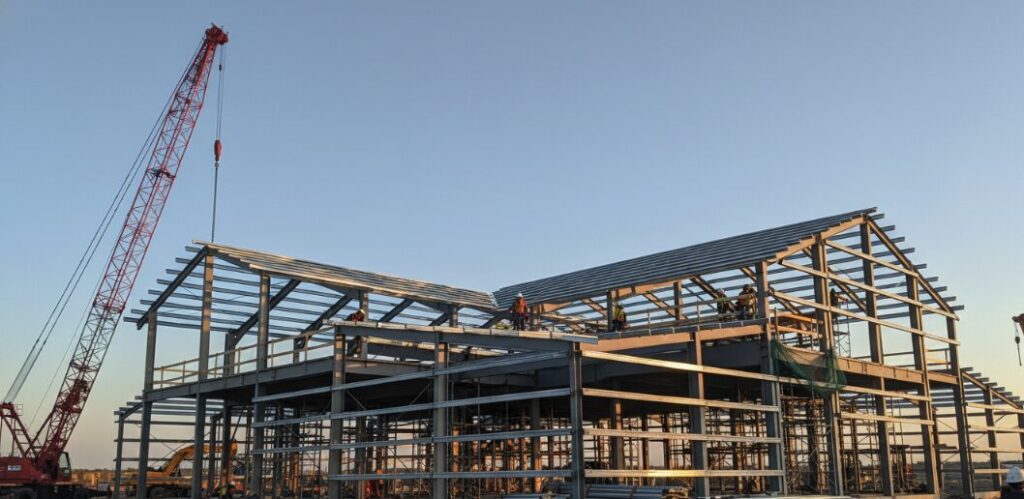
Step 1: Component Classification and Specification Review
The basis for calculating the amount of steel is whether you are careful enough to read the structural construction drawings (IFC) and deepening drawings. The material grade of steel (such as ASTM A36, A992 or Q355B commonly used in China) must be clearly separated, because this is directly related to the unit price and procurement strategy.
- Main components: Statistics of all I-shaped steel, H-shaped steel (UB/UC) and hollow structural steel (HSS).
- Secondary members: Do not miss purlins, wall beams and support systems (angles, channels, etc.).
- Physical Properties: Verify steel density. Although the standard density is 7,850 kg/m , some special alloy steels may have minor deviations, which can be a lot of money when accounting for large tonnage projects.
Steel Structure Workshop
Steel Structure Workshops offer versatile designs. Clear Span ensures unobstructed space, while Centre and Intermediate Columns provide economical solutions for wide spans.
Bridge/Steel Structure Bridgeipsum
Steel Structure Bridges utilize high strength-to-weight ratios to achieve long spans where intermediate supports are difficult.Their versatility makes them essential for critical infrastructure connectivity.
Steel Structure Buildings
Steel Structure Buildings feature versatile designs to meet diverse needs. Clear Span offers open space, while Centre and Intermediate Columns increase economy for large spans. Multi Gable accommodates complex widths.
Step 2: Calculate the Net Weight of the Linear Member
Once the component classification is complete, the next step is to determine the “net weight” of the linear component “. This part usually accounts for the vast majority of the overall BOQ weight.
- Extract Length: Measure the exact length of each beam or column from the drawing.
- Check the specification sheet: Read the standard steel manual (such as AISC or British Standard).
- Calculation formula: Total weight = total length x unit weight (per meter or per foot)
Step 3: Quantifying Connecting Plates and Reinforcing Plates
In the preliminary estimation stage, the connector is most easily overlooked, and this is often the “culprit” that leads to budget overruns “. Such components do not have the so-called “line weight” and must be calculated by volume.
- Area calculation: Determine the surface area (length x width) of each board.
- Volume calculation: Area multiplied by slab thickness.
- Weight conversion: Weight = volume (m³) × 7,850kg/m³
Step 4: Consider Losses, Bolts and Welds
If you only calculate the net weight, then this list is definitely not enough in actual construction. To arrive at the “gross weight” we really need in project procurement, we must add the industry standard correction factor:
- Loss coefficient (3-5%): mainly to cover the remaining material in the process of turning around.
- Bolts and welds (10-15%): It is a waste of time and unnecessary to count bolts one by one. Senior estimators usually take a percentage of the total weight of the member to cover the weight of heavy structural bolts and welding materials.
- Surface treatment: if the steel to do hot galvanized or heavy anti-corrosion coating, remember to add 1-2% weight increment.
Step 5: Transitioning to Digital Precision
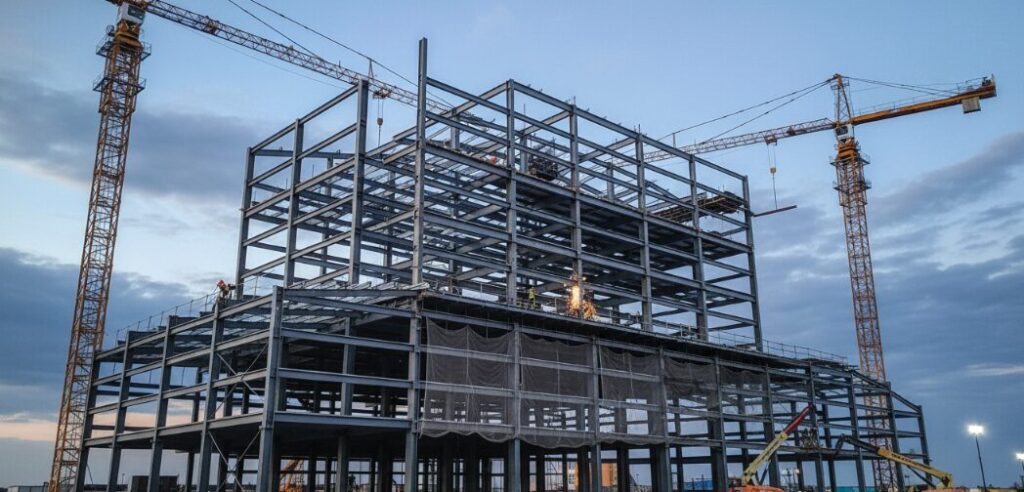
Although manual calculation is the basic skill and the confidence of reconciliation audit, the current projects are becoming more and more complex, and BIM (Building Information Model) has long been standard.
With BIM software, you can achieve:
- Automated MTO generation: Direct data from 3D models.
- Collision Check: Make sure that there are no overlapping components in your calculations to avoid double counting.
- Dynamic update: Once the design is changed, the BOQ will change automatically, so there is no need to stay up late to change the figure.
Name: David Steve
“I am a Senior Structural Estimator with over 12 years of experience in the steel fabrication and construction industry. Throughout my career, I have specialized in transforming complex blueprints into precise Bills of Quantities, balancing rigorous manual MTO methods with modern BIM workflows like Tekla and Revit.”