 GAOERJI STEEL


Search
How To Erect Structural Steel
In order to make the steel structure stable and accurate, a set of accurate five-step system process must be broken: first, the embedded anchor bolts must be checked according to the drawings, and the accuracy must be cut to millimeter level; The second step is to hoist the steel column in place with a crane and initially position it with a leveling nut. The third step is to connect the main beam and build a stable “Cell/Bay”. Then use total station or laser sweeper to correct verticality, which is what we often call “alignment”; The last step is the final tightening of high-strength bolts or on-site welding, and the secondary structures of purlins and supports are installed incidentally. This set down, in order to ensure the structural safety of the plant, but also in line with the current prefabricated steel structure standards.
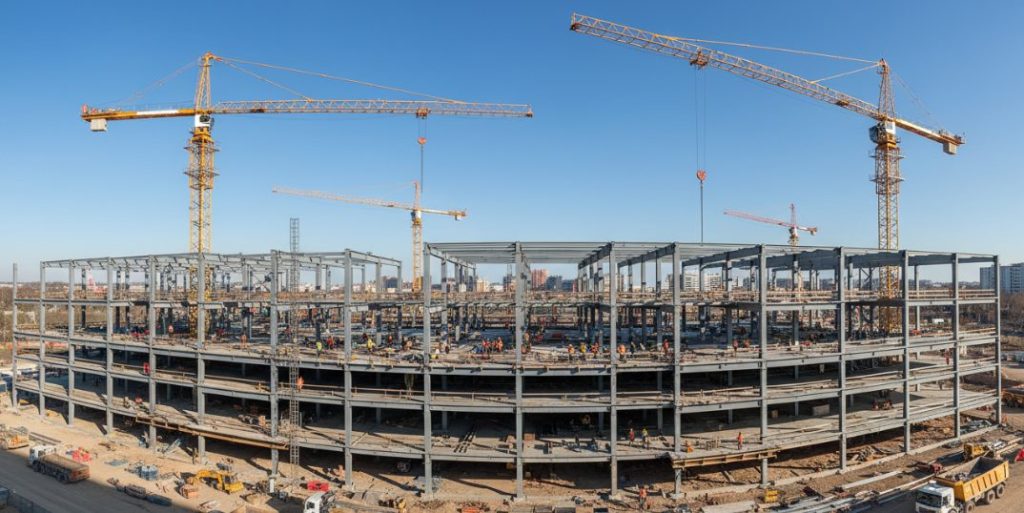
Step 1: Foundation Retest And Anchor Bolt Detection
Whether the steel structure can be installed is actually decided before the first beam comes into play. The foundation is the “materialization” of drawings, and a little mistake is full of trouble.
Drawing check: The construction party must take the deepened processing drawing and go to the site to check the actual position of anchor bolts one by one.
Millimeter accuracy: If the foundation is crooked even a few millimeters, when the steel frame is erected to a height of more than 10 to 20 meters, that deviation can make you doubt your life. Using high-precision measuring tools to check the “extension length” and “spacing mode” of the bolts to ensure that the steel column bottom plate can be smoothly inserted, rather than burning electric welding reaming on site.
Steel Structure Workshop
Steel Structure Workshops offer versatile designs. Clear Span ensures unobstructed space, while Centre and Intermediate Columns provide economical solutions for wide spans.
Bridge/Steel Structure Bridgeipsum
Steel Structure Bridges utilize high strength-to-weight ratios to achieve long spans where intermediate supports are difficult.Their versatility makes them essential for critical infrastructure connectivity.
Steel Structure Buildings
Steel Structure Buildings feature versatile designs to meet diverse needs. Clear Span offers open space, while Centre and Intermediate Columns increase economy for large spans. Multi Gable accommodates complex widths.
Step 2: Steel Column Hoisting And Initial Positioning
There is no problem with the foundation acceptance, and the vertical skeleton of the building can begin to rise from the ground. This stage is about heavy machinery with absolute safety regulations.
Crane selection: Car crane or tower crane? It depends on whether the site is large enough and how many components there are. If you choose the wrong crane, the construction period will be delayed by at least half.
Safety of rigging: For matters of life, all hoisting belts, shackles and pole beams must have certificates of approval, and the insurance coefficient must be calculated for specific loads.
The wonderful use of leveling nut: After the steel column is sleeved into the anchor bolt, the leveling nut reserved under the bottom plate is used to fine-tune the height. There maybe a little unevenness in the concrete plaster. Only when these nuts are adjusted and finally non-shrinkage grouting material is poured can the base be stable.
Step 3: The Formation Of The Structure “Unit” Or “Open Room”
The mistake that novices are prone to make is to pack along a line. But within the line, the safest way is to first enclose a “cell”.
Main beam connection: After the column is stable, the main beam is immediately hoisted.
Temporary bolts are stable: At this time, the bolts only need to be “finger tightened” or initially tightened. Why leave room? Because we have to leave room for adjustment for the next “alignment”, but we must ensure that the frame has enough rigidity to resist wind and self-weight.
Step 4: Verticality Correction (Alignment)
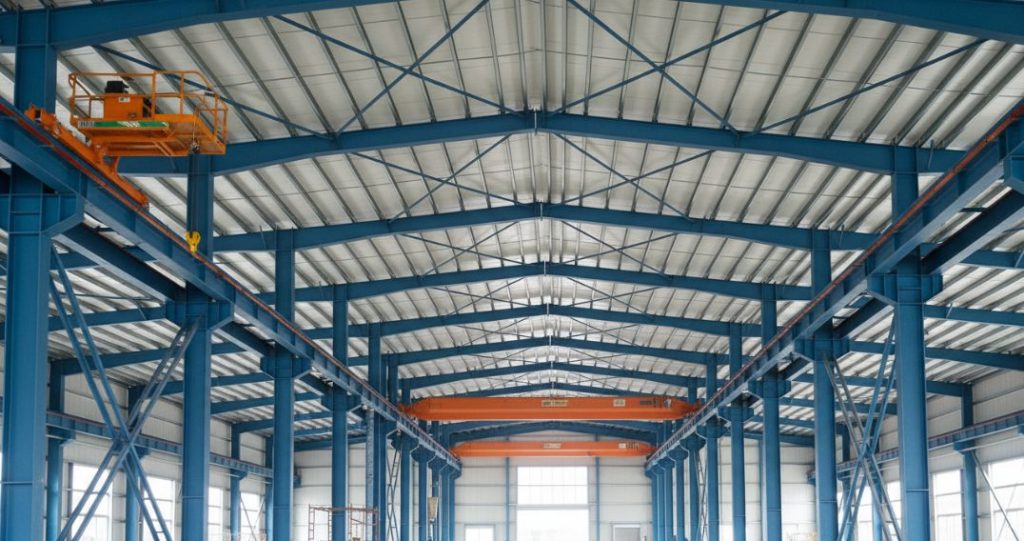
The naked eye looks straight, does not mean that the structure is really no problem. Dry steel structure installation, must trust scientific instruments.
Total Station and Laser Point-to-Point: We use a high-precision total station or 3D laser scanner to review the “plumb” of the steel column “.
Systematic alignment: The entire framework will be adjusted repeatedly until the allowable deviation required by the specification is met. If this step is saved, it will be too late to regret when the structure is deformed due to uneven stress. This step is the death order of quality inspection.
Step 5: Final Screw Fixing And Secondary Structure Installation
After this step is completed, the temporary stacked components are truly a rigid whole.
High-strength bolt connection: Replace temporary bolts, or directly screw A325 or A490 high-strength bolts. Whether it is a “corner method” or a fixed torque wrench, it is necessary to ensure that the pre-tightening force is in place.
On-site welding: Some high stress nodes, the design will require on-site repair welding to enhance rigidity.
Perfect skeleton: After the main frame is locked, install purlins, wall beams and supports at once. These secondary components provide support for the building’s “skin” (containment system) and are key to the lateral resistance of the prefabricated steel structure.
Why Steel Structure Installation Must Pursue Precision?
The choice of steel structure partners is not only to buy the tons of steel, but also to buy the precision of the installation process. In Wedospace, we provide a complete set of engineering solutions to standardize this five-step process in order to reduce on-site rework. Every prefabricated steel structure must stand the time for examination, and safety and durability are always the standards engraved in the bones.
Author: David Wei
“Hi, I’m a structural engineering specialist at Wedospace with years of hands-on experience in the PEB (Prefabricated Steel Structure) industry. My professional philosophy is built on the belief that a building’s soul lies in its precision. I specialize in transforming complex technical drawings into high-accuracy physical structures, always advocating for the ‘millimeter-level’ standards that define structural safety. From foundation retests to the final alignment of massive steel frames, I am committed to standardizing installation processes to ensure every project we deliver is not just a building, but a durable, high-performance landmark that stands the test of time.”
The prev: What Type Of Steel Is Structural SteelThe next: How To Reduce Vibration In Steel Structure