 GAOERJI STEEL


Search
How To Frame With Steel Studs
To frame with steel studs, first play the accurate positioning line, fix the U-shaped track on the ground and ceiling with appropriate fasteners (such as Tapcons for concrete and large flat head screws for wood), and then clip the C- shaped keel in every 16 inches (O.C.). Unlike wood, steel keels can be pre-positioned by friction before being permanently fixed, and then locked with self-tapping pan head screws.
In order to keep the wall vertical, I strongly recommend bringing a magnetic level and pliers all the way-this will free your hands to screw accurately. There is another detail: the “opening” direction of all keels must be the same. In terms of cutting, aviation shears are used for small jobs, and cutting machines with metal saw blades are directly used for large quantities.
This video provides a quick tutorial on how to frame a steel stud wall:
Step1: Establish Accurate Layout
The success of light steel keel construction depends on the setting-out. Wood still has some elastic space, but steel keel is very “stubborn”. It is almost impossible to fine-tune the wall where the track is set.
Bullet line: mark the exact position of the ground track with a high color rendering powder box.
Vertical alignment: I will use a plumb line or laser level to project the ground line onto the ceiling to ensure that the upper and lower tracks are absolutely parallel. If this step is out of shape, the back keel is definitely crooked.
Step2: Installation Of U-Shaped Track
The track is the upper and lower keel of the wall and the foundation of the whole wall.
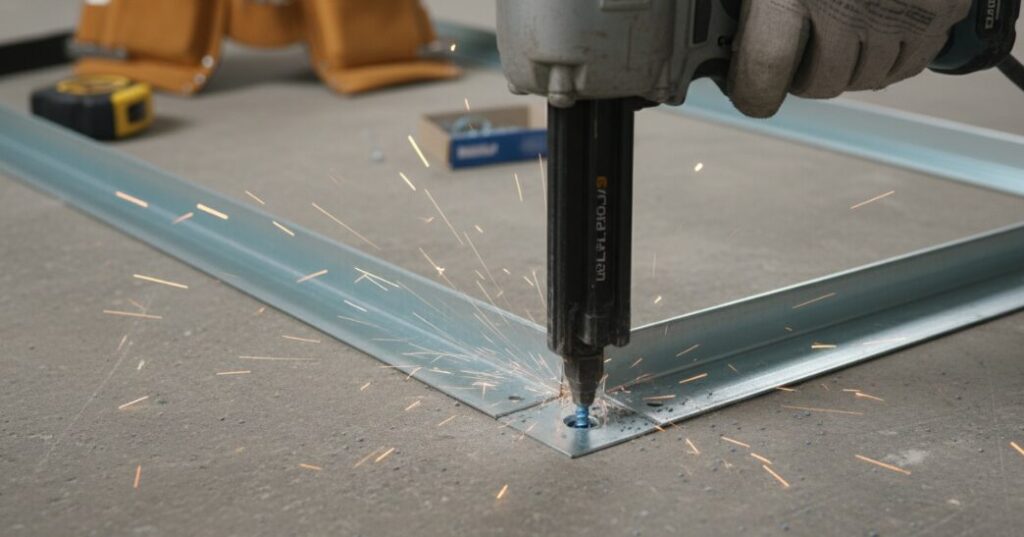
Choose the right fastener: if it is concrete ground, I will use nail gun or Tapcon bolt; If it is a wooden base, choose a large flat head screw , which has a thin head and will not resist the keel.
Tips: track length with aviation tailoring. If a track is not long enough to overlap, remember to overlap by at least 6 inches, then screw it to make sure it is as stable as the whole.
Step3: Positioning And Clamping Of C- Shaped Keel
After the track is installed, the vertical C- shaped keel can enter the site. At this time, the “fast” of the light steel keel is reflected.
Friction positioning: when cutting steel keel, it should be about 1/4 inch shorter than the actual height, so as to smoothly “card” into the upper and lower tracks.
16-inch spacing (O.C.): Strictly follow building codes and erect every 16 inches. That “friction” allows you to fine-tune the position like a string before screwing to find the most accurate line.
The opening direction is the same: remember that all keel notches must face the same direction. This is not only for good looks, but also for the screw to have a stable supporting surface when the gypsum board is nailed at the back, so that it will not retract the top.
Step4: Professional Fixing And Leveling
Metal-to-metal fixation requires a little skill, otherwise the screw 1 drill and the keel begins to “run”.
Stabilization with pliers: Before screwing, clamp the keel and the flange of the track with C- type pliers. This prevents the keel from spinning or shifting when the screw is drilled.
Magnetic level: engage in steel keel construction, magnetic level is simply an artifact. It can suck on the keel, allowing you to free your hands to clamp and screw, while keeping an eye on the verticality.
Screw selection: self-tapping pan head screws must be used (that is, we often say “skeleton screws”). The design of this nail head is very thin, and the surface is flat after loading the gypsum board, so it will not bulge.
Steel Structure Workshop
Steel Structure Workshops offer versatile designs. Clear Span ensures unobstructed space, while Centre and Intermediate Columns provide economical solutions for wide spans.
Bridge/Steel Structure Bridgeipsum
Steel Structure Bridges utilize high strength-to-weight ratios to achieve long spans where intermediate supports are difficult.Their versatility makes them essential for critical infrastructure connectivity.
Steel Structure Buildings
Steel Structure Buildings feature versatile designs to meet diverse needs. Clear Span offers open space, while Centre and Intermediate Columns increase economy for large spans. Multi Gable accommodates complex widths.
Step5: Precision Cutting Technology
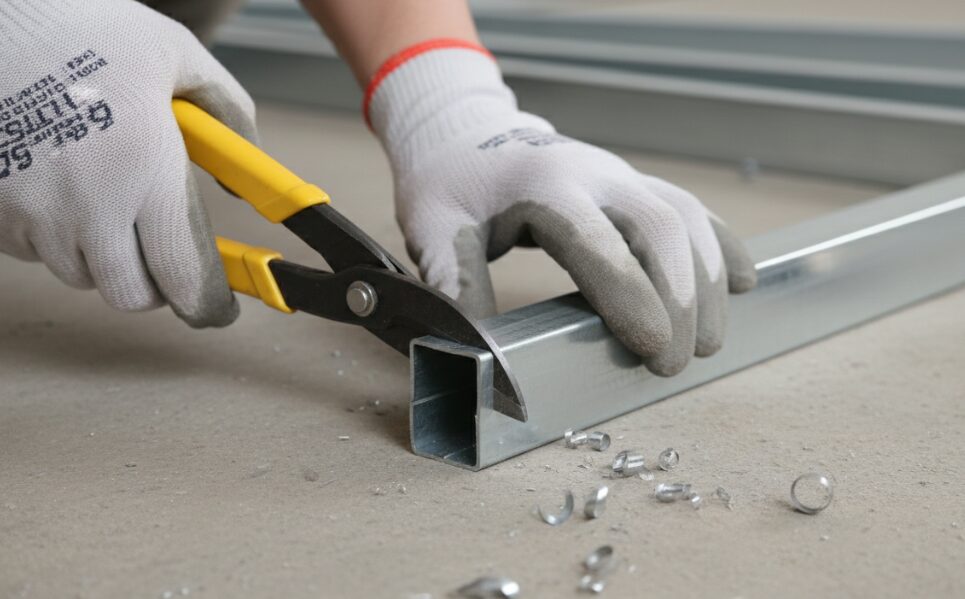
Aviation shears: when handling single keel or trimming flange, aviation shears (straight head, left bend and right bend set) are standard.
Cutting machine: In case of big project or thick wall keel, I will directly pull out the cutting machine with alloy saw blade or grinding wheel blade. Although the spark is lightning and noisy, the cut is neat and efficient. Remember, goggles and earmuffs are a must.
Step6: Electrical Safety And Electromechanical Embedment
Professional contractors must take into account the hassle of subsequent types of work, especially electricians.
Use of reserved holes: the steel keel is provided with pre-punched holes for threading pipes and routing. When erecting the keel, be sure to align these holes horizontally and don’t let the electrician turn around.
Plastic Mouth Guard: This is the bottom line of compliance. All wires passing through the hole must be equipped with plastic protection. The edge of the steel is as sharp as a knife. If there is no mouth guard, the long-term vibration will cut the wire skin sooner or later and cause a short circuit. We cannot afford this risk.
Strengthen support: if the customer wants to hang heavy TV or cabinet in the later period, wooden cushion blocks or special thickened steel braces should be installed between the keels now.
Author: Marcus Thorne
“I’m a veteran contractor with over 11 years of experience in commercial and residential framing. Throughout my career, I’ve specialized in transitioning traditional wood-framing crews to high-efficiency steel systems. My focus is on teaching the precision and ‘system-based’ mindset required to master steel studs—from perfect layout lines to code-compliant mechanical rough-ins. I believe that with the right tools and professional techniques, anyone can build straighter, safer, and more durable walls using steel.”
The prev: How To Build A Steel Frame Tiny HouseThe next: Do Steel Frame Homes Rust