 GAOERJI STEEL


Search
Does Structural Steel Need To Be Fireproofed
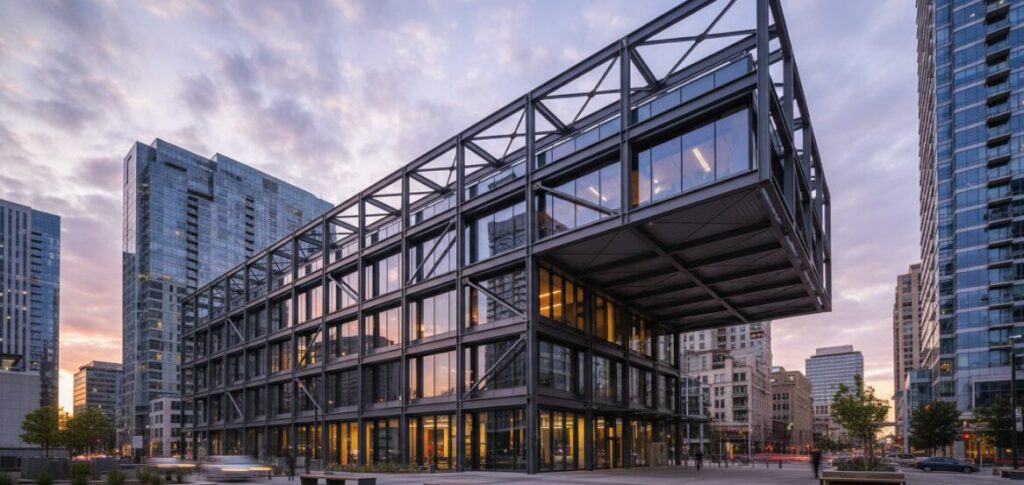
Yes, structural steel usually requires fire protection to prevent structural collapse, but the specific regulations depend entirely on the type of building construction defined in the International Building Code (IBC).
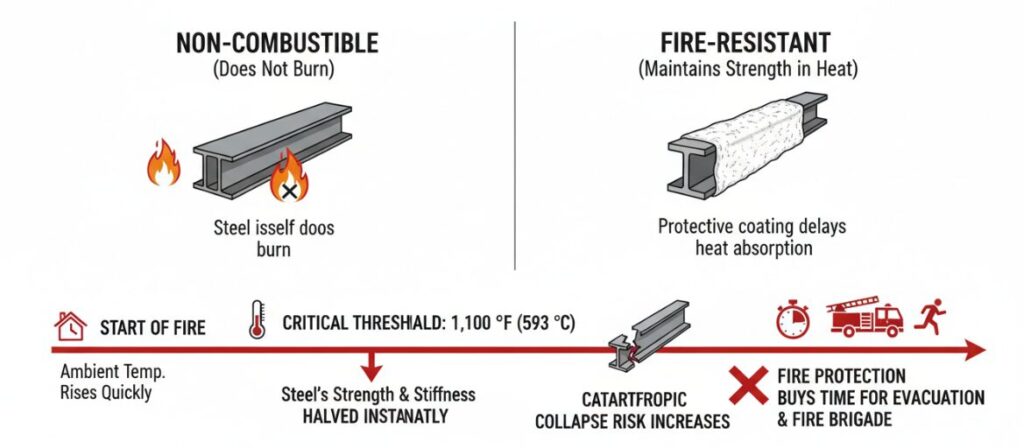
Steel is indeed a non-combustible material, but this does not mean that it is “not afraid of fire”. Data show that steel loses about 50% of its capacity (I. e., yield strength) at 1,100 °F (about 593°C). Unfortunately, in a standard building fire, it only takes minutes to reach this temperature, not hours.
Therefore, for Type I, Type II-A and Type III-A construction projects, steel members (columns, beams and trusses) must be fireproofed to meet specific fire resistance limits (usually 1, 2 or 3 hours).
If your project is classified as Type II-B (unprotected non-combustible structure) or Type V-B, or you can meet specific sprinkler system reduction conditions and fire spacing, then structural steel may not need active fire protection. In the final analysis, it depends on the intersection of the nature of the building’s use (Occupancy Group), height/area restrictions and the type of construction.
The Physical Properties Of Steel In Fire
To understand why structural steel needs fire protection, we must first correct a conceptual misunderstanding: distinguish between “non-combustible” and “fire-resistant”.
Steel itself does not burn. However, its mechanical properties are severely degraded at high temperatures. For structural engineers, 1,100 °F(593°C) is a life-or-death threshold. In a typical building fire, the ambient temperature soars so fast that once the steel reaches this temperature, its yield strength and stiffness are instantly halved.
At this point, the risk of a catastrophic collapse of the structure increases dramatically. We do fire protection measures-whether it is spraying fire retardant coating or coating-is not essentially to keep the steel itself, but to delay the time when the steel reaches this critical temperature, to buy time for evacuation and fire brigade entry.
Type Of Construction Required For Fire Protection In The IBC Code
IBC divides buildings into 5 broad categories, each of which specifies a different fire resistance rating. The following categories are the hardest hit areas where fire prevention must be carried out on steel components:
Type I Construction:
Usually high-rise buildings or those crowded high-risk locations. This type of building has the most stringent fire protection requirements. In this type of project, structural steel columns, beams and trusses must be closely protected, and fire resistance limits of 2 to 3 hours are often required. After all, the higher the building, the longer it takes to run down.
Type II-A (Protected Non-Combustible/protected Incombustible Construction):
The materials of this type of construction are non-combustible (steel and concrete). Notice the “A” here-in the vernacular, seeing “A” usually means “Protected (protected)”. This means that the main structural frame must reach a fire resistance limit of 1 hour.
Type III-A:
The exterior walls of such structures are usually non-combustible, but the internals can be of any material permitted by the specification. Again, the “A” here again emphasizes “protected”, meaning that the internal structural steel needs to be fireproofed to meet the corresponding hours requirement.
Steel Structure Workshop
Steel Structure Workshops offer versatile designs. Clear Span ensures unobstructed space, while Centre and Intermediate Columns provide economical solutions for wide spans.
Bridge/Steel Structure Bridgeipsum
Steel Structure Bridges utilize high strength-to-weight ratios to achieve long spans where intermediate supports are difficult.Their versatility makes them essential for critical infrastructure connectivity.
Steel Structure Buildings
Steel Structure Buildings feature versatile designs to meet diverse needs. Clear Span offers open space, while Centre and Intermediate Columns increase economy for large spans. Multi Gable accommodates complex widths.
When Can Steel Structures Be “Streaked”?
Not all steel structures need to be tightly wrapped. When we do cost control, we often use specific scenarios in IBC to keep steel “unprotected:
Type II-B (Unprotected Non-Combustible/non-protected Non-Combustible Structure):
If the project can be classified into Type II-B, it will be much easier. The code recognizes that the risk of this type of building (based on its use and scale) is low enough that the steel frame does not require a fire rating. This is very common in low-rise commercial buildings or warehouses, where you will see steel beams directly exposed.
Type V-B:
This is the least restrictive type (usually light wood construction, but also steel construction). “B” stands for “no protection”, meaning that the structural member does not require any fire resistance rating.
Fire Separation Distances:
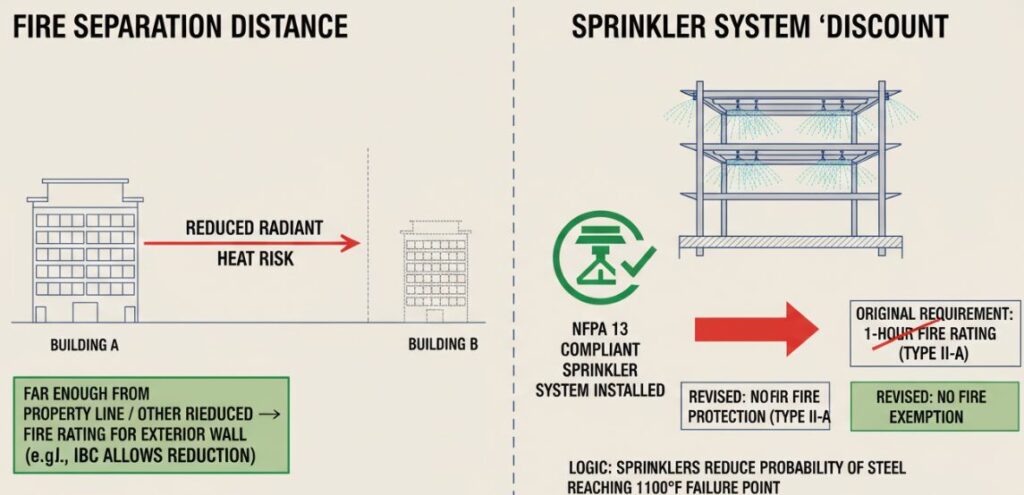
If your building is far enough away from other buildings or property lines, the risk of radiant heat will be reduced. In this case, the IBC allows to reduce the fire rating requirements of the outer load-bearing wall according to the fire spacing.
Automatic Sprinkler System “Discount” Game
The automatic sprinkler system is a key variable when deciding whether a steel structure needs fire protection.
IBC allows “Tradeoffs” after a fully compliant NFPA 13 sprinkler system has been installed “. This is very common in actual design, and installing a sprinkler system often allows the design team to reduce the fire resistance rating required for structural steel.
For example, a building that originally required a 1-hour fire rating (Type II-A) according to the code may be allowed to be reclassified or exempted from being built according to Type II-B (no protection) because of a powerful sprinkler system. The logic is simple: an active fire suppression system (sprinkler) reduces the probability that the steel will reach that fatal 1,100 °F failure point.
Nature Of Use, Height And Area
Finally, to sum up, the answer to “whether structural steel needs fire protection” is not a Yes or No, but a calculation process based on three factors in the specification:
Nature Of Use:
What is the house for? A high-risk facility for storing flammable materials or a crowded auditorium must have much stricter fire prevention rules than a small warehouse.
Height And Area:
The larger and taller the building, the more difficult it is to evacuate and extinguish fires. Therefore, as the volume increases, the IBC will tend to mandate Type I or Type II-A structures, which triggers the requirement of fire protection.
Construction Type:
This is a comprehensive analysis of the above two points after the final classification.
In short, when the combination of nature, height and area pushes you towards a specific construction type (such as Type I, II-A, or III-A), you must fire-protect the steel structure to prevent it from losing its strength in a fire.
Author:Michael Ross
I’m a Senior Structural Engineer specializing in fire protection strategies. With over 14 years of experience in commercial construction, I help architects and developers navigate complex IBC regulations to balance structural safety with cost-effective fireproofing solutions.