 GAOERJI STEEL


Search
Is It Cheaper To Build A Steel Frame House
Upfront, it is typically 5% to 15% more expensive than wood; however, it becomes cheaper when calculating the Total Cost of Ownership over 5+ years. In the current construction market, while raw steel materials cost slightly more than lumber, you can often recoup this difference through 30% faster framing speeds (reducing labor hours) and significantly lower waste (less than 2% for steel vs. 20% for wood). For self-builders utilizing pre-engineered steel kits, the initial build cost can actually be lower than a custom stick-built wood home. Furthermore, steel frames offer long-term savings through reduced insurance premiums (due to fire resistance), zero termite treatment costs, and no structural warping, making it the financially superior choice for long-term homeowners.
Upfront Premium Vs. Total Holding Cost
The expected upfront investment will be about 5% to 15% higher. This is mainly limited by the raw material cost of steel relative to wood on the current market.
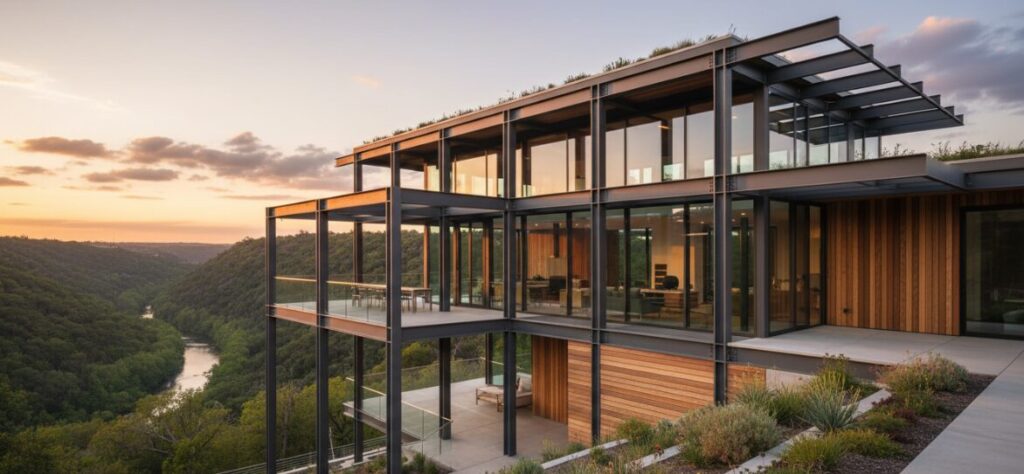
However, it is easy to be misled by just looking at the early numbers. Once you introduce the concept of Total Cost of Ownership (TCO), the balance of financial advantage tilts in favor of steel structures. The data show that this break-even point usually occurs around the 5th year after moving in. For homeowners who plan to live in the long term, the initial overpayment is actually an investment that will slowly pay back through the durability and energy efficiency of the house. When the mortgage is repaid, you will find that it is actually cheaper to choose steel structure.
How Construction Speed Offsets Material Costs
Although steel itself is more expensive than wood, during the construction process, the steel structure began to show its ability to return to the original. In the construction industry, time is real money.
The frame construction speed of steel structure can be about 30% faster. This is evident on the site: steel components are usually pre-cut, pre-punched, the specifications are not bad, the site is basically efficient assembly. In contrast, traditional wood frames require a lot of on-site measurement, cutting and repeated adjustment.
This increase in speed translates directly into a reduction in man-hours. The construction period is shortened, and the wages and on-site management fees you pay the contractor are naturally less, which largely fills the material price difference between steel and wood.
Steel Structure Workshop
Steel Structure Workshops offer versatile designs. Clear Span ensures unobstructed space, while Centre and Intermediate Columns provide economical solutions for wide spans.
Bridge/Steel Structure Bridgeipsum
Steel Structure Bridges utilize high strength-to-weight ratios to achieve long spans where intermediate supports are difficult.Their versatility makes them essential for critical infrastructure connectivity.
Steel Structure Buildings
Steel Structure Buildings feature versatile designs to meet diverse needs. Clear Span offers open space, while Centre and Intermediate Columns increase economy for large spans. Multi Gable accommodates complex widths.
The Cost Of Scrap
When calculating “which is cheaper”, many people-even many novice experts-ignore the cost of scrap.
Building a house out of wood, big chunk of your budget actually ends up in the trash. Industry estimates show that wood frame construction generates approximately 20% of waste due to scrap, wood defects and bending deformation. In contrast, steel structures are precision engineering, with scrap rates below 2%.
This account is actually amazing:
- With wood: You pay 100 percent of the cost of materials, but only about 80 percent, and the rest of the 1/5 budget is tantamount to throwing away.
- With steel: Every penny you pay goes into the structure of the house.
This efficiency ensures that your money is spent on the house itself, not on the cost of cleaning up construction waste.
Financial Advantages For Self-Building Homeowners (Using Steel Structure Kits)
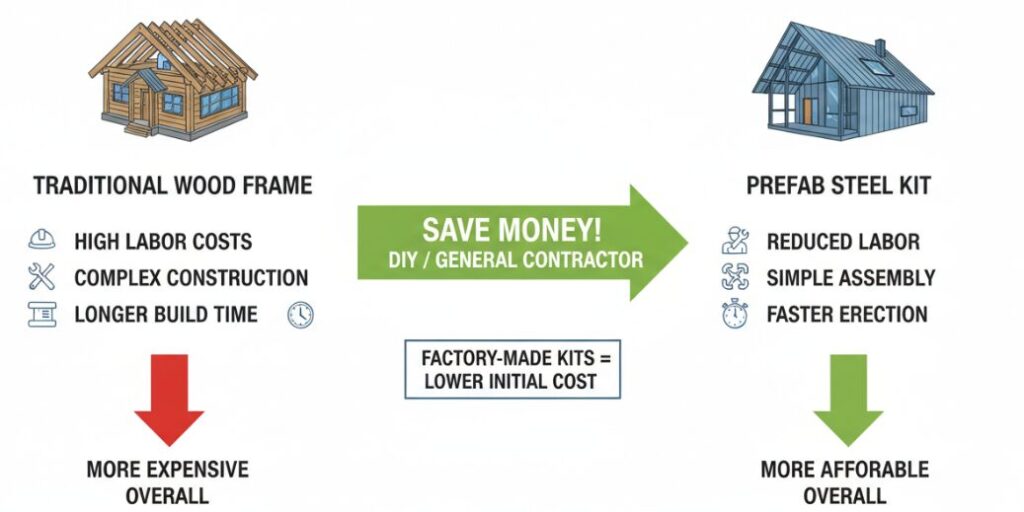
With prefabricated steel kits, it is entirely possible that the initial construction cost is lower than a custom wood frame house. These kits are produced in the factory and shipped directly to the site. Because the complex engineering design has been completed in the early stage, the site erection process becomes very simple. This means that homeowners can avoid the high labor costs of hiring a team of professional carpenters-skilled big workers are not cheap these days.
For those who have strong hands-on skills (DIY-inclined) or act as a general contractor themselves, the steel structure kit is a direct shortcut to save money.
Insurance And Maintenance
Finally, the financial advantages of steel structures are further consolidated in terms of post-occupancy operating costs. Once the house is built, it will continue to save you money in the following 3 key areas:
- Lower insurance premiums: Because steel is non-combustible and has superior fire performance, insurance companies usually regard such houses as low risk and give lower monthly premiums.
- Zero Termite Expenditure: Steel is inorganic and immune to termites and other pests. You no longer have to worry about expensive chemical control costs, or because of moth-eaten repair structure.
- The structure is not out of shape: wood will shrink, twist and deform with changes in humidity. This “movement due to breathing” can cause dry walls to crack, doors and windows to close tightly, and requires continuous maintenance. The steel structure is extremely stable in size, which directly eliminates these subsequent maintenance costs.
All in all, while the price tag is indeed a bit higher at first glance, given the labor savings, extremely low waste, and long-term operational savings, steel structures are undoubtedly a smarter financial choice for homeowners planning to live longer.
Author: Mark Stevenson
As a Construction Cost Analyst with over 15 years of industry experience, I specialize in the financial comparison of structural materials. My goal is to help self-builders and homeowners look past sticker prices to understand the true Total Cost of Ownership. I focus on how factors like framing speed, material waste, and insurance savings make steel a financially superior choice for the long term.